

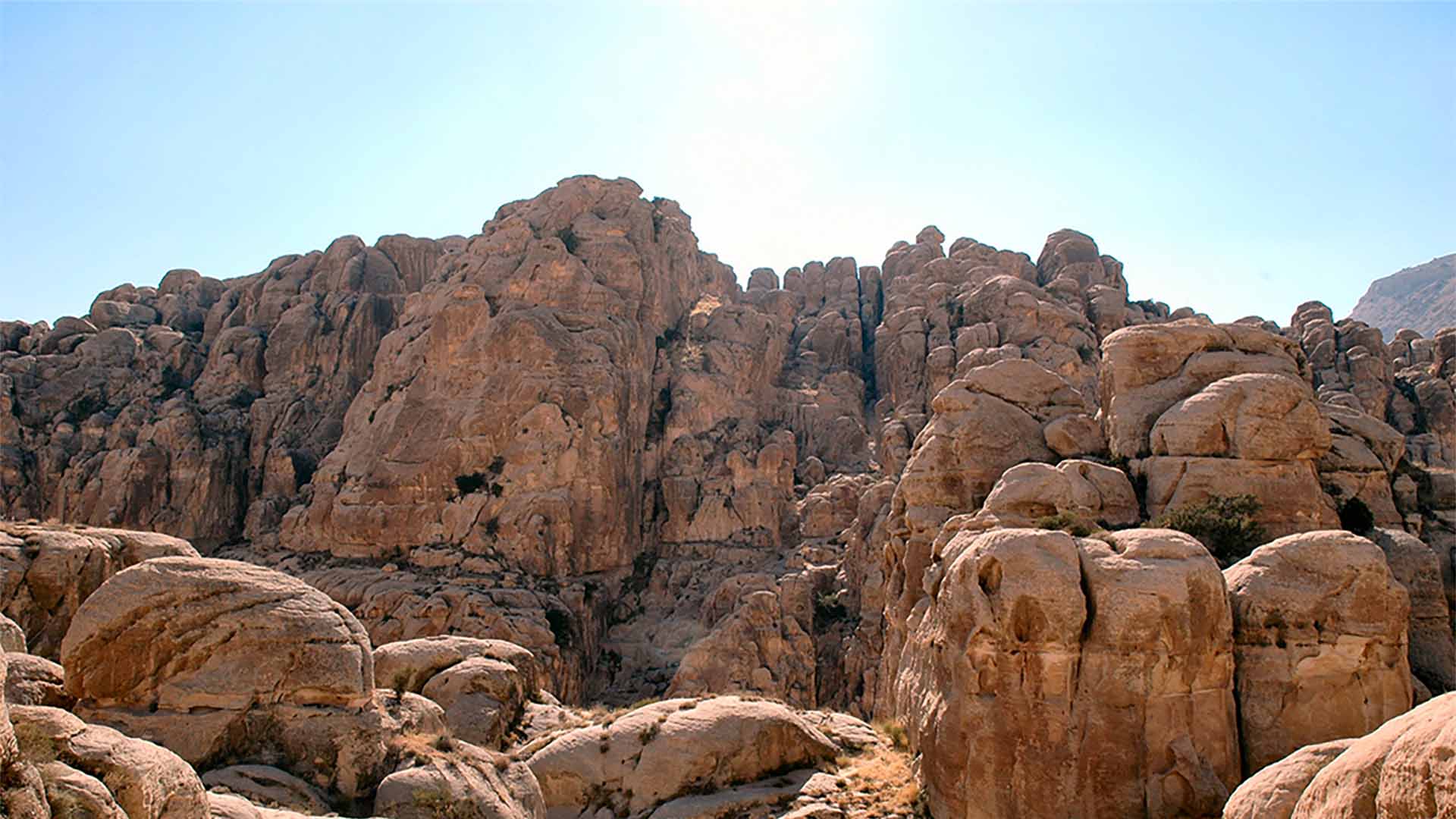
ancient Edom
in control?
ancient Edom
in control?
ancient Edom
in control?
MISSION BRIEF
Your destination
- Place
- Edom and Seir, south and east of Judah, with mountain strongholds such as Sela
- Prophet
- Obadiah—“servant” or “worshiper of Yahweh”; little else is known
- Audience
- Judah; a prophecy about Edom spoken for God’s people
- Written
- The exact date is uncertain; two leading settings are 853–841 BC and 587–586 BC
- Crisis
- Edom gloated over and participated in the disaster of its brother nation
- Question
- Can any power, nation, or fortress escape the sovereign Lord?
ONE EXPEDITION, TWO FORMATS
Choose how you will
explore Obadiah
Mark and keep a printed Field Notes journal, or carry the same visual expedition inside Bible Ventures.
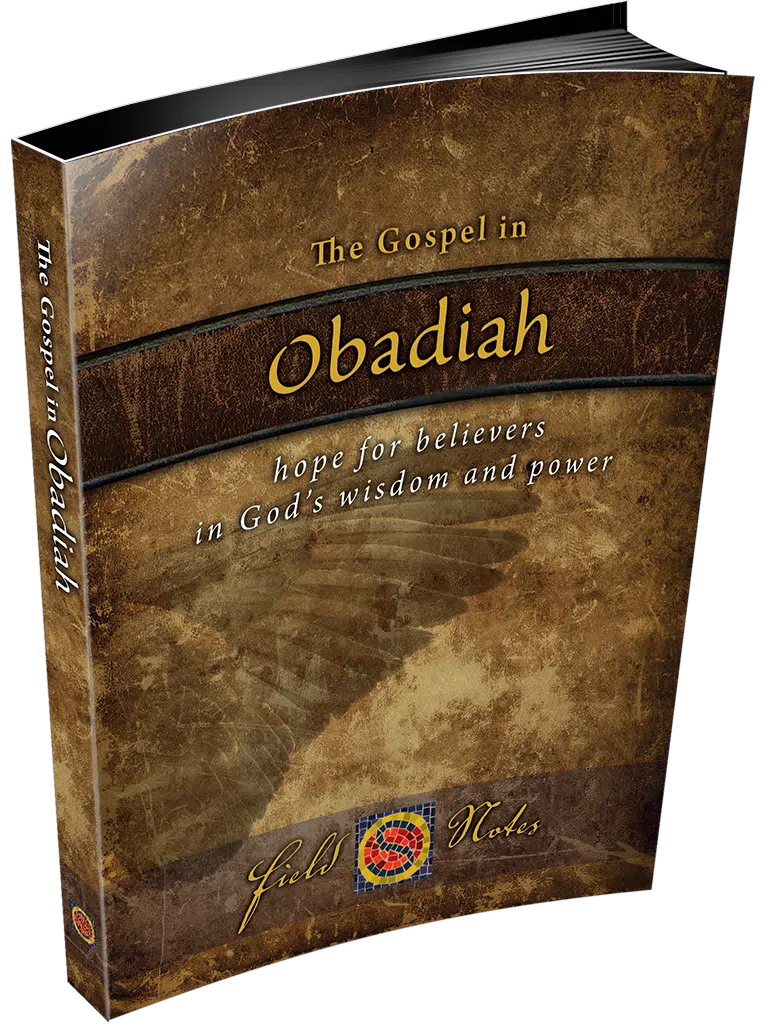
Printed Field Notes
5 Field Studies · 94 full-color pages
- Five complete Field Studies
- Maps, timelines, structural charts, Discoveries, and writing space
- For personal study, Sunday school, and small groups
Original price was: $24.95.$16.95Current price is: $16.95.Add to cart

WHY STUDY OBADIAH?
Twenty-one verses can expose the pride of nations—and the pride of the human heart.
The shortest book in the Old Testament tells a very long story.
Obadiah enters a world of arrogance, betrayal, violence, revenge, judgment, and hope. Edom believed its mountains, wisdom, warriors, and alliances made it secure. Yet its greatest crime was not merely confidence in a fortress. It was standing aloof while a brother suffered—and then joining the destruction.
The prophecy teaches that God sees what nations do, repays violence justly, preserves his promises, and establishes his kingdom. That is why a message of judgment against Edom becomes a source of hope for believers.
A SMALL PROPHECY WITH A VAST HORIZON
One family. Two nations. A day of violence. The Day of the Lord.
A red-rock kingdom between Arabia and Judah.
Edom occupied the rugged country south and east of the Dead Sea.
The land was associated with Mount Seir and the descendants of Esau. Its principal places included Sela and Teman. The King’s Highway carried travelers and trade along the plateau, while steep valleys and cliffs made the region appear almost unassailable.

Esau
Hunter · Seir · EdomThe older brother
Jacob
Israel · the covenant lineThe younger brother
The international conflict began inside one household.
Edom and Israel were not merely neighboring states. They descended from brothers.
A struggle before birth
God told Rebekah that two nations were in her womb and that the older would serve the younger.
A birthright traded
Esau despised his birthright and sold it to Jacob for food.
A blessing taken
Jacob deceived Isaac; Esau resolved to kill his brother; Jacob fled.
Two names become two peoples
Jacob became Israel. Esau settled in Seir, and his descendants became Edom.

Requested route: passage along the King’s Highway
Israel asked a brother for passage. Edom came out with an army.
Centuries after Jacob and Esau, the old hostility remained alive in their descendants.
As Israel approached the Promised Land, Moses appealed to Edom using the language of kinship: “your brother Israel.” He promised to stay on the main road and pay for water. Edom refused and displayed military force. Israel turned away rather than attack.
Pass through. Stay on the road. Pay for what is used.
No passage. Armed resistance. The long way around.
Family bitterness hardened into centuries of conflict.
The study traces repeated collisions between Israel, Judah, and Edom from the monarchy through the prophets.
Saul
Israel fights surrounding enemies, including Edom.
David
Edom is subdued after conflict in the Valley of Salt.
Solomon
Hadad the Edomite becomes an adversary.
Jehoshaphat
Edom is involved in regional warfare and shifting power.
Jehoram
Edom revolts from Judah’s rule; one proposed setting for Obadiah.
Amaziah
Judah defeats Edom and captures Sela.
Azariah
Judah recaptures Elath.
Ahaz
Edom strikes Judah and recovers territory.
The prophecy names the crime, but not the year.
Obadiah refers to a major assault on Jerusalem. More than one historical setting could fit.
The study presents two leading possibilities. Each has evidence for and against it. The date question matters for reconstructing the background, but the message does not depend on solving it with certainty.
The prophet disappears behind the word he carries.
Other than his name, Scripture tells us little about Obadiah.
His name means “servant of Yahweh” or “worshiper of Yahweh.” He gives no hometown, family line, royal connection, or personal story. The messenger is almost hidden so that the sovereign Lord’s message stands in full view.
The prophecy concerns Edom, but the study understands Judah as its audience. A doom oracle against the oppressor becomes comfort for the afflicted: God has seen, God will judge, and God’s covenant purposes will stand.
A servant who makes the invisible God audible.
An oracle of reversal
Edom appears high but will be brought low. Judah appears ruined but will be restored. The nations seem free to act, but the Day of the Lord will expose every deed. The final word belongs not to Edom, Babylon, or any human power—but to the Lord’s kingdom.
Obadiah moves from false security to violent betrayal to universal judgment.
The compact prophecy has a clear progression. Each movement intensifies the one before it.
Pride and downfall
Edom trusts its mountain home, wisdom, warriors, wealth, and alliances. God announces that each support will fail.
- Called to attention
- Pride exposed
- Hidden treasures plundered
- Allies betray
- Wisdom and strength collapse
Violence against a brother
The prophecy names the conduct that flowed from pride: indifference, gloating, looting, blocking fugitives, and handing over survivors.
- Stood aloof
- Became like the invader
- Rejoiced over ruin
- Entered the gates
- Seized the vulnerable
The Day of the Lord
Edom’s day becomes a preview of a day for all nations. Judgment answers deeds; Mount Zion is restored; the kingdom belongs to the LORD.
- As you have done
- The nations drink
- Deliverance on Mount Zion
- Jacob restored
- The Lord reigns
Edom trusted four defenses that could not survive God’s decree.
Pride was not merely a feeling of superiority. It was confidence that the nation had made itself untouchable.
Terrain
Cliffs and rock dwellings seemed to defeat every attacker before battle began.
Treasure
Trade routes and hidden wealth suggested lasting prosperity.
Wisdom
Teman’s reputation for counsel made Edom trust human understanding.
Warriors and alliances
Military strength and friendly treaties seemed to guarantee survival.

Violence began by doing nothing.
The prophecy shows a moral descent from indifference to active participation in destruction.
Edom did not begin by striking the first blow. It began by standing at a distance while strangers carried away Jerusalem’s wealth. Pride made another people’s suffering entertaining; entertainment became exploitation; exploitation became murder and captivity.
This progression gives Obadiah continuing force. The question is not only whether we commit obvious violence. It is whether pride teaches us to watch, rejoice, profit, obstruct rescue, or surrender the vulnerable.
The repeated word “day” turns history into a warning for every nation.
Edom used Judah’s day of distress for pride, profit, and violence.
Obadiah’s repetition forces the reader to remain in that day and watch the crime unfold. Then the horizon widens: the Day of the Lord is near for all nations. The principle of reversal is stated with severe clarity—what a nation has done returns upon its own head.
- Judah suffers
- Edom gloats
- Invaders plunder
- Fugitives are trapped
- Deeds are exposed
- Pride is humbled
- Violence is repaid
- God’s rule is revealed

The prophecy does not end with an empty Edom. It ends with a restored people and a reigning God.
Judgment is not the final horizon. The Lord claims what violence appeared to destroy.
Deliverance on Mount Zion
God preserves a holy people.
The house of Jacob receives its inheritance
Lost land is named and restored in the prophecy’s vision.
Edom’s pride is consumed
Fire and stubble portray complete reversal.
Saviors ascend Mount Zion
God’s agents judge the mountains of Esau under his authority.
The stronghold remained. The nation did not.
The Field Notes study traces Edom’s later history through displacement, Idumea, the Herodian family, and the disappearance of a distinct Edomite people.
Pressure on Edom
The study connects Edom’s decline with Arabian and Babylonian upheaval.
Nabataean control
Nabataean peoples occupy the old Edomite land and develop Petra.
Idumea
Edomite descendants become associated with territory farther west.
John Hyrcanus
The study describes Idumeans being incorporated into the Jewish state.
Herod’s dynasty
Antipater and Herod represent the last major Idumean political prominence.
A people disappears
After Rome destroys Jerusalem, Edom no longer appears as a distinct nation.


Obadiah’s opposite is not merely a humble nation. It is the humble King.
Edom climbed high, protected itself, and rejoiced at a brother’s fall. Jesus descended, gave himself, and reconciles enemies to God.
The way of Edom
- Exalts itself
- Trusts position and power
- Stands aloof from suffering
- Profits from another’s ruin
- Answers injury with hostility
The way of Christ
- Humbles himself
- Takes the form of a servant
- Enters human suffering
- Gives himself for sinners
- Makes peace through the cross

The study follows these themes through the wider story of Scripture to Christ.

Obadiah points beyond Edom to the King who will put every wrong right.
The prophecy’s good news is not that judgment disappears. It is that judgment belongs to the perfectly righteous Lord.
God does not ignore pride, violence, betrayal, or national cruelty. He holds the nations accountable. Yet the same sovereign rule that terrifies the oppressor comforts the afflicted. God’s promises reach their fulfillment in Jesus Christ—humble in his first coming, exalted as Lord, and returning as righteous Judge and King.
He sees accurately, judges impartially, and repays evil without corruption.
No mountain, empire, alliance, or generation lies outside his rule.
God remains faithful to his redemptive promises through Christ.
The future belongs not to violent nations but to the kingdom of God.
Five Field Studies through Obadiah
The study begins with the family feud, excavates every verse, and ends by placing Obadiah within the whole story of Scripture.
A family conflict became a long war of nations
Obadiah background
Pride is deceptive before a sovereign God
Obadiah 1–9
Pride degenerates into violence and leads to destruction
Obadiah 10–14
The Day of the Lord will come to all
Obadiah 15–21
Believers will find hope in God’s wisdom and power
Obadiah in Scripture
See, read, mark, discuss, and remember.


Open the Obadiah Field Notes
Explore 32 selected pages from the actual study: the setting of Obadiah, a complete field study on Obadiah 10-14, the Day of the Lord, and hope in Christ.

Open the cover. Begin the expedition.
Begin with Survey the Land, printed page 1, opposite the inside front cover. Turn through original pages, maps, Discoveries, and space for your own observations.
Open the study samplerUse the arrows to turn pages, zoom for detail, or open full screen. Escape closes the reader.
Is God really in control?
Walk the red-rock strongholds of Edom. Follow the feud from twin brothers to warring nations. Watch pride descend into violence. Then stand on Mount Zion and hear the prophecy’s final answer: the kingdom belongs to the LORD.
Hope for believers in God’s wisdom and power

Will Be
The LORD’s
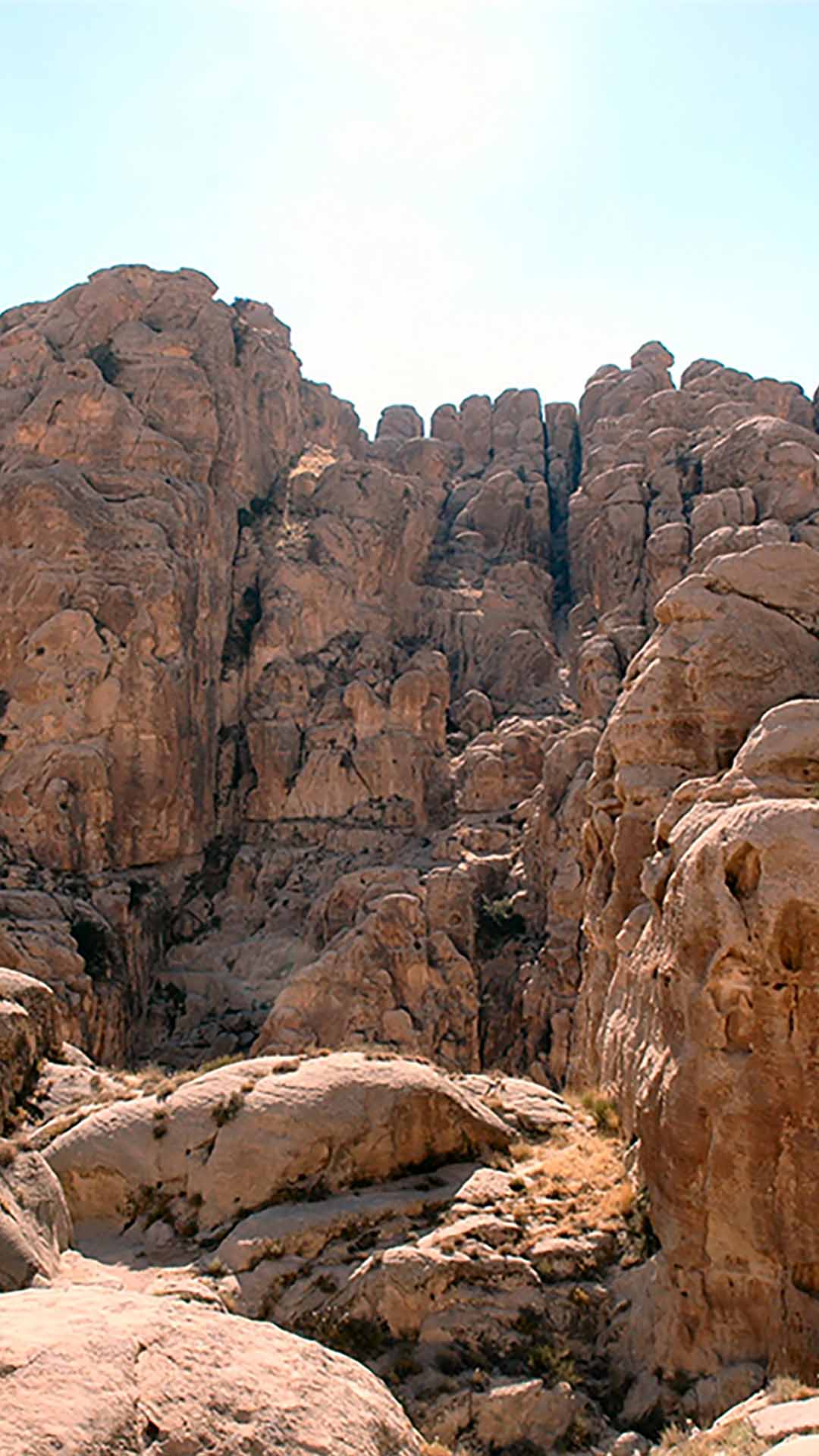
Sela photo: Uri Juda, Wikimedia Commons, public domain; dark overlay.
