

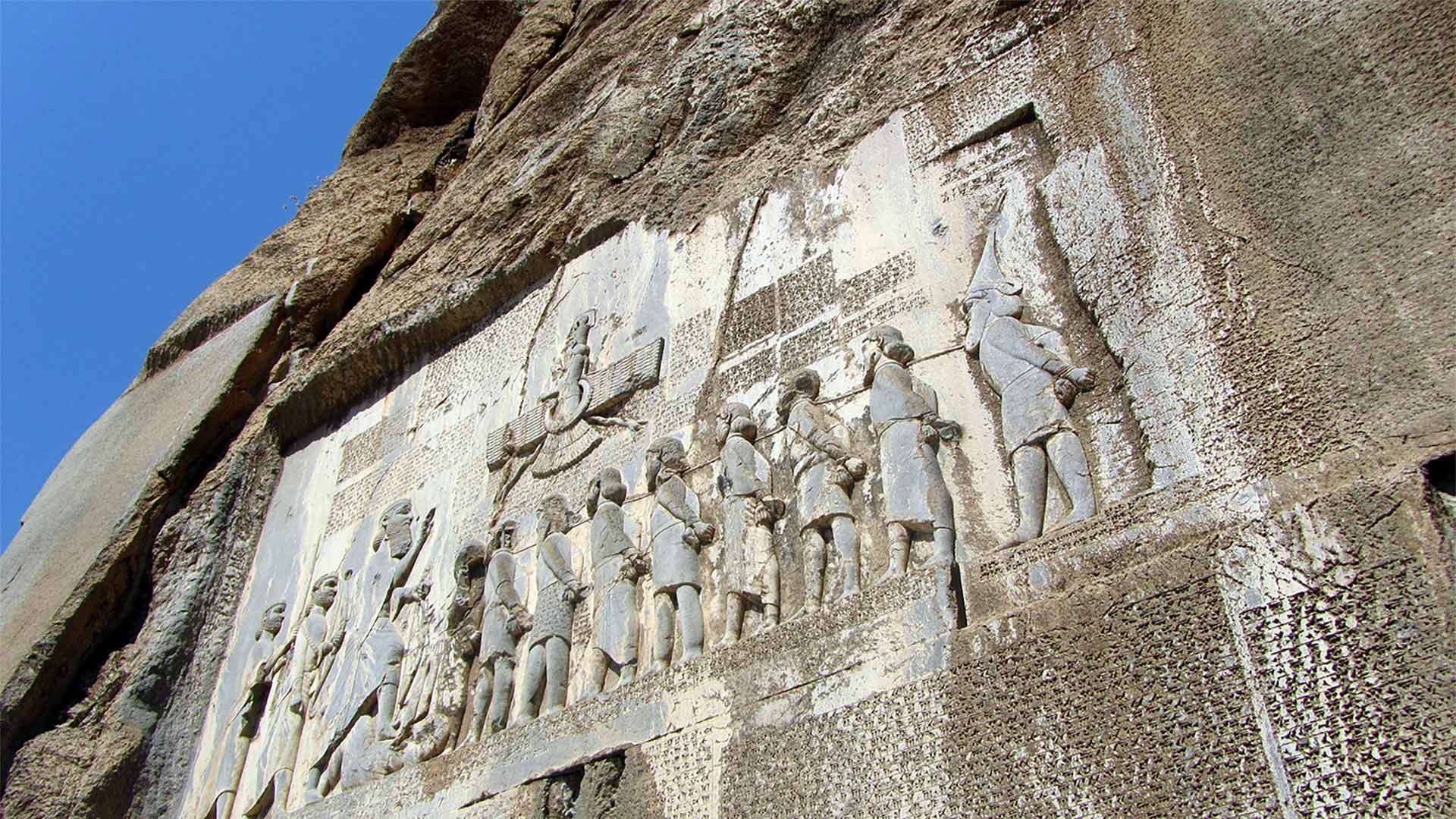
of King Darius
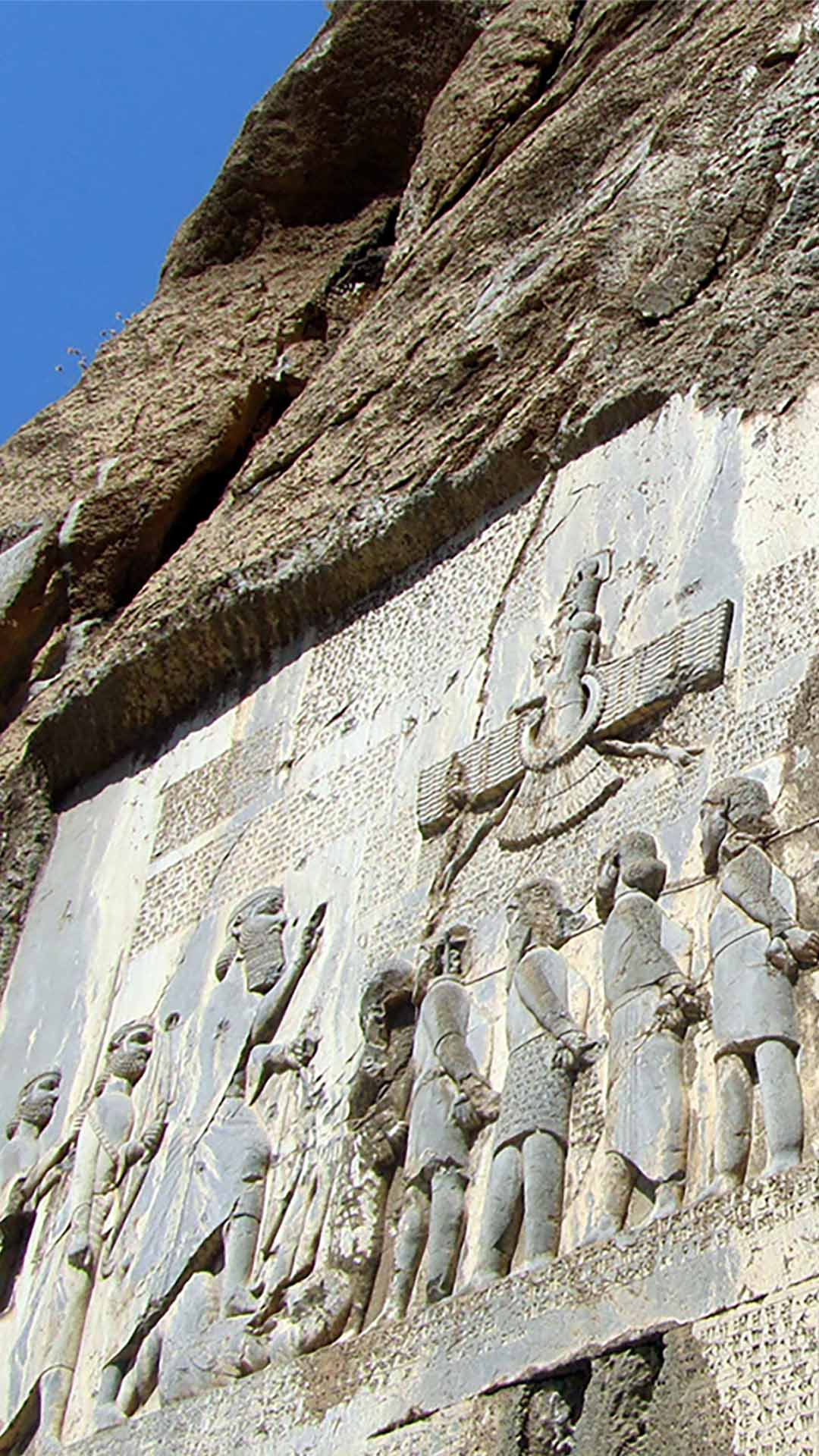
of King Darius
of King Darius
MISSION BRIEF
Jerusalem under Persian rule
CHOOSE YOUR EDITION
Two ways to enter the same expedition
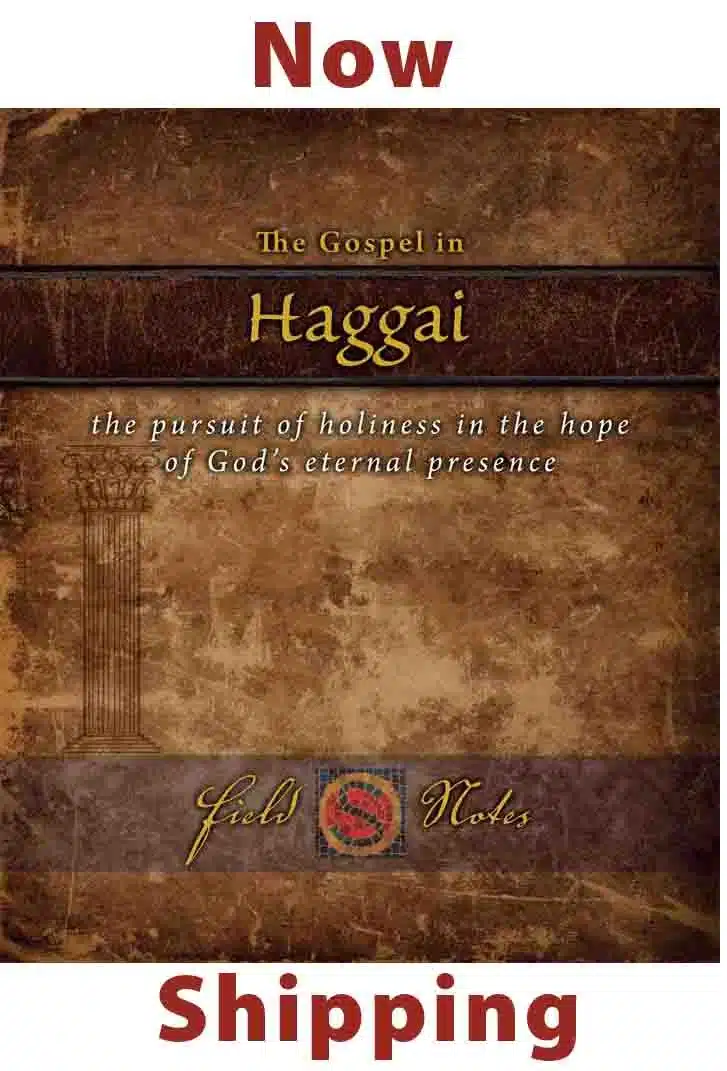
Study with a printed journal in hand or carry the full-color experience inside Bible Ventures.
Printed Field Notes
- Five complete Field Studies
- 108 full-color pages in the current edition
- Maps, timelines, charts, and visual resources
- Discoveries, discussion, and writing space
- Designed for personal or group study

Bible Ventures Edition
One-time purchase
- No subscription
- Integrated Bible access
- Portable full-color study
- iPhone, iPad, Android, and Windows
- Haggai available wherever you study
Original price was: $24.95.$16.95Current price is: $16.95.Add to cart
WHY STUDY HAGGAI?
The Temple was not the real treasure.
God’s presence among his people was the blessing. The ruined house revealed a deeper ruin in their priorities.
The returned exiles were not openly rejecting God. They had simply postponed obedience while building comfortable lives. Opposition had become an explanation for delay, and delay had hardened into a way of life.
Haggai breaks into that normal life with one repeated command: give careful thought to your ways. He calls God’s people to see what their choices reveal about what they value most.
The question is not merely, “What are you building?” It is, “Whose kingdom comes first?”
THEIR HOUSES
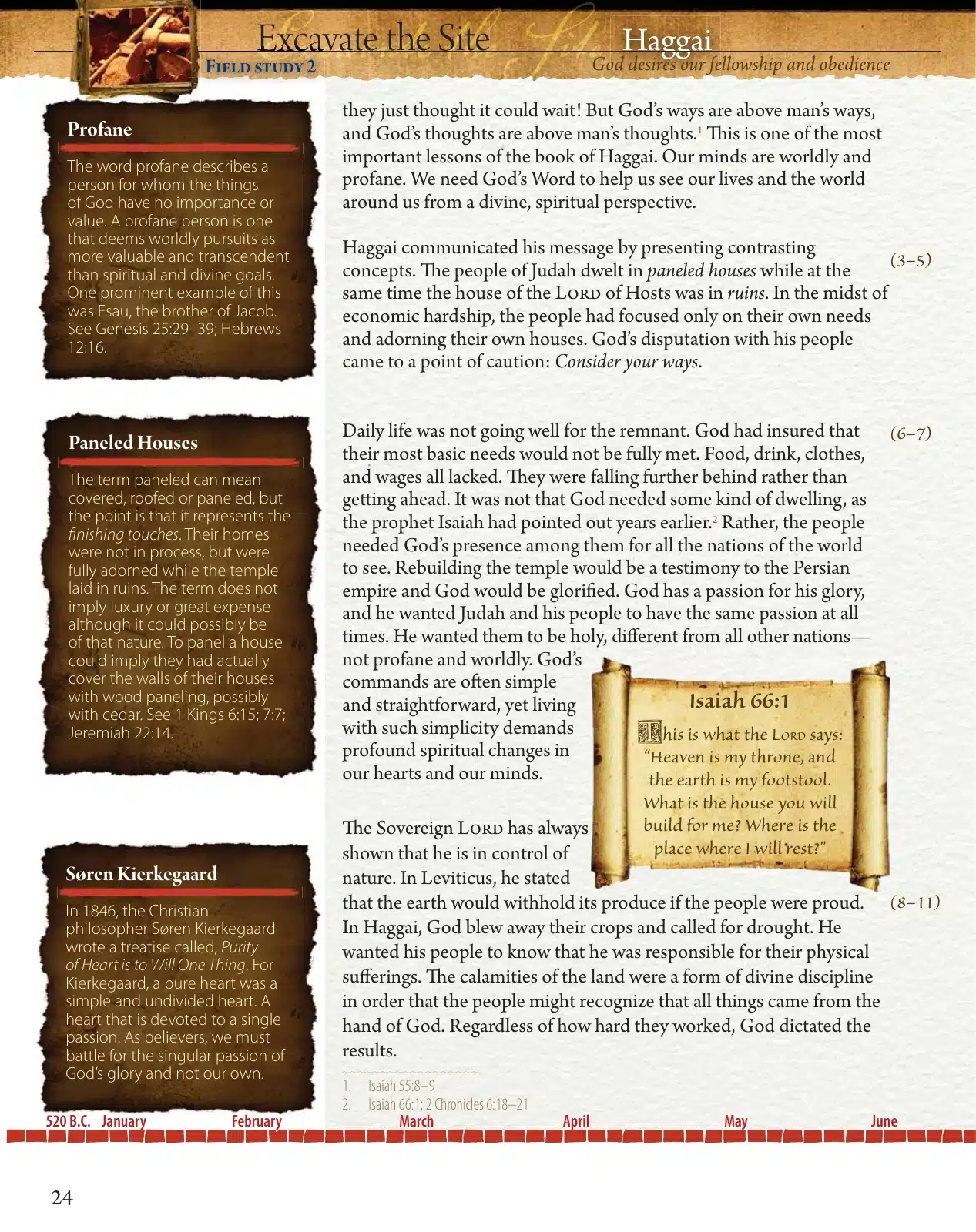
Paneled homes, roofs, fields, wages, comfort
They worked hard, earned money, planted crops, and improved their homes—while the foundation of the Lord’s house remained abandoned.
CAREFUL
THOUGHT
HIS HOUSE
Presence, worship, obedience, glory
The Temple mattered because God had chosen to place his name among his people. Rebuilding it was an act of covenant loyalty.
God longs to dwell with his people
Haggai’s four messages make sense only inside the larger biblical story of God’s presence.
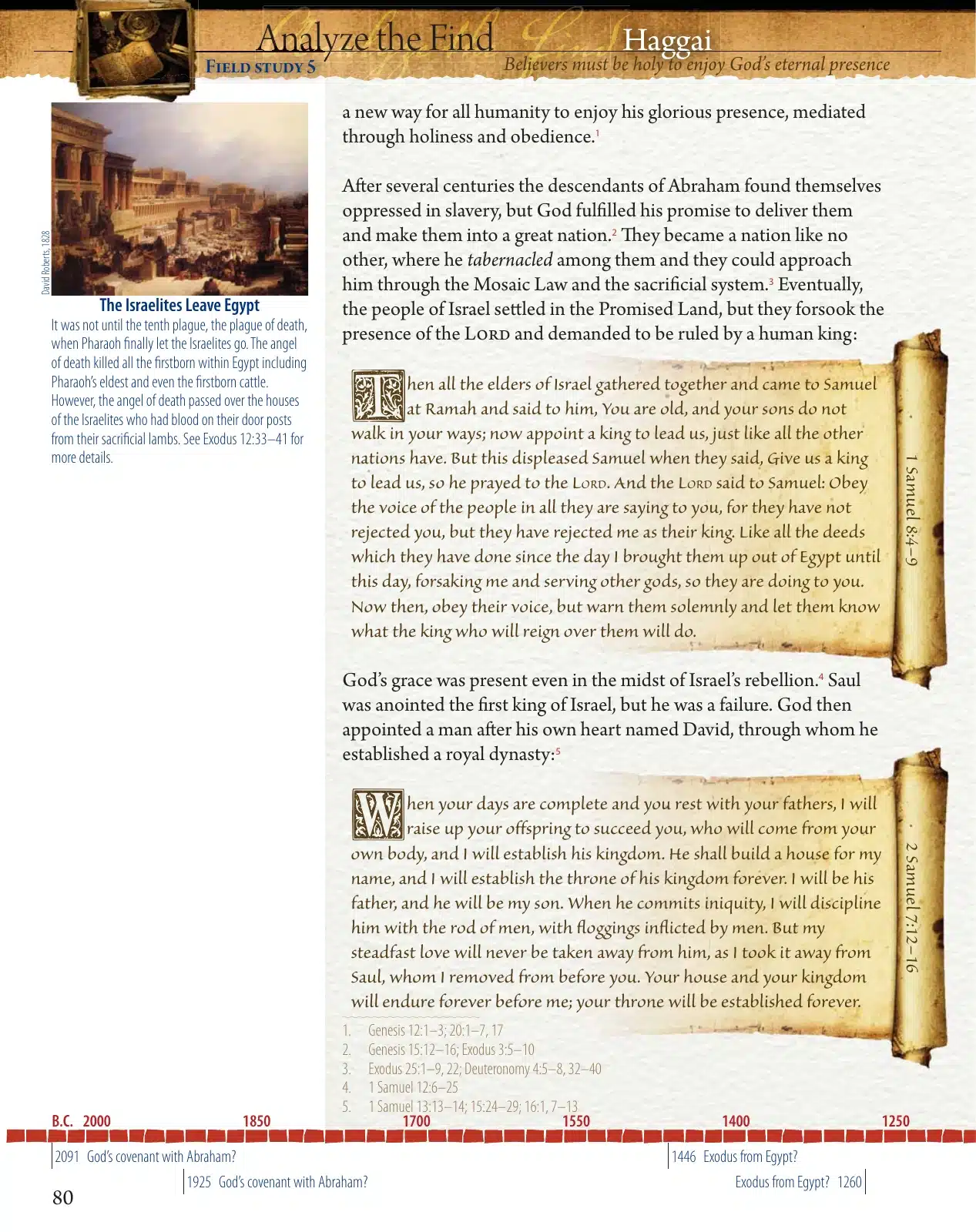
Promise
God calls Abraham and forms a people through whom all nations will be blessed.
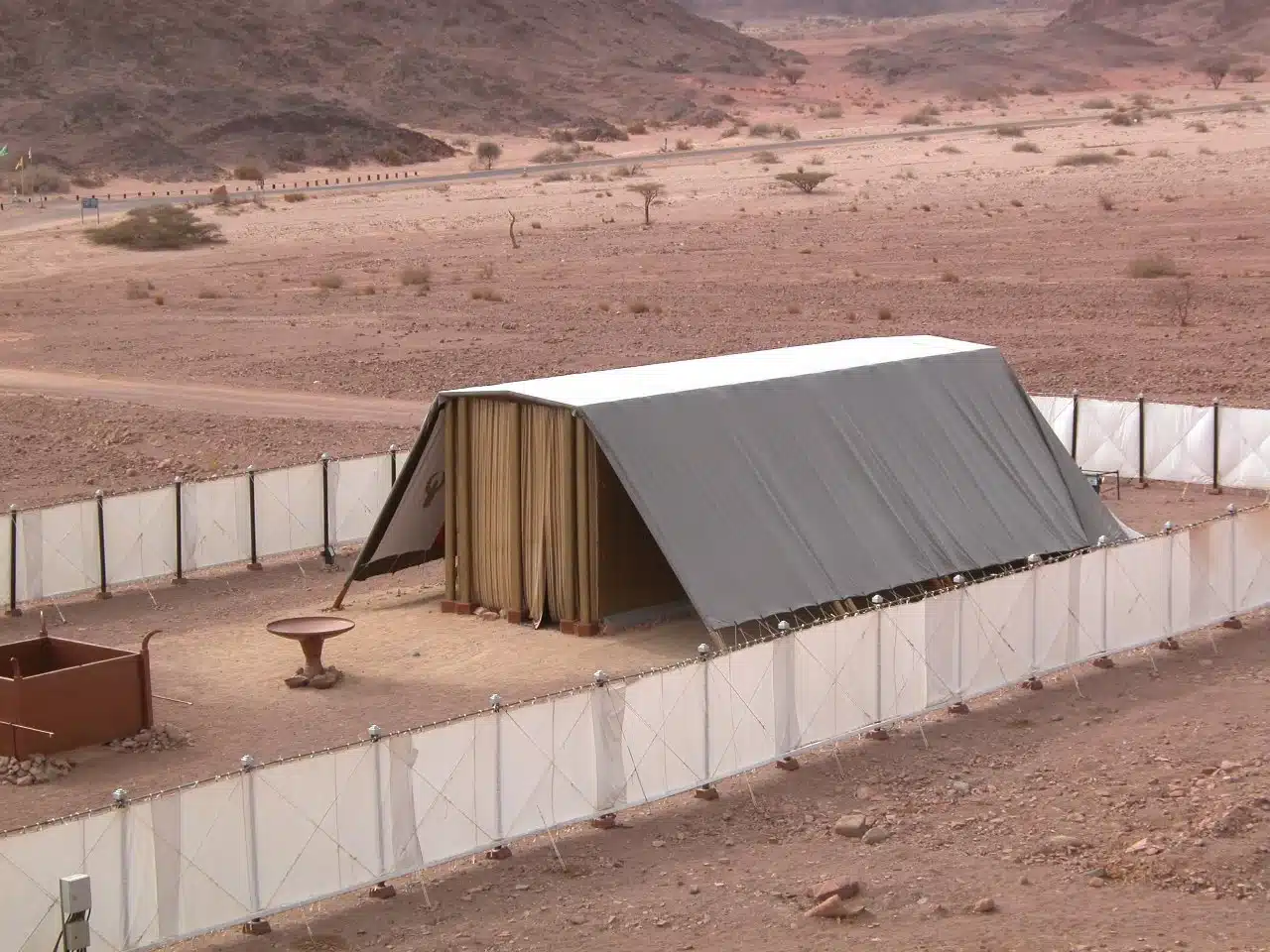
Tabernacle
God dwells among Israel and leads them through the wilderness.
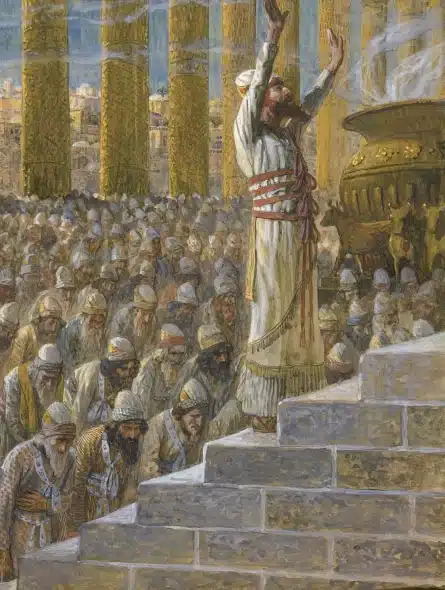
Solomon’s Temple
A permanent house in Jerusalem becomes the center of Israel’s worship.
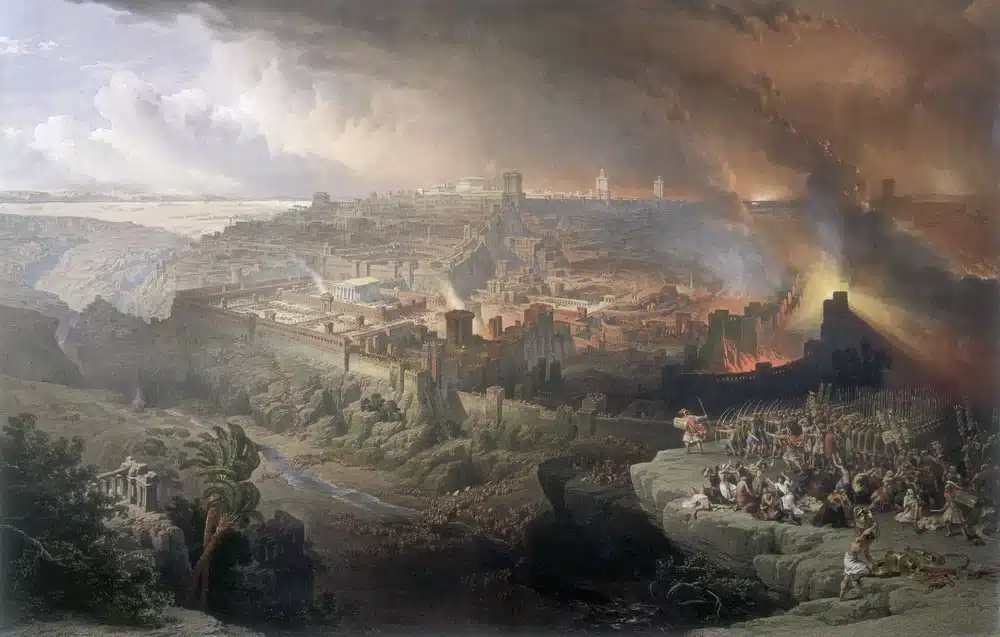
Exile and Ruin
Judah’s unfaithfulness ends in judgment, destruction, and removal from the land.
The Temple was never a container that confined God. It was the visible center of his covenant presence among a holy people.
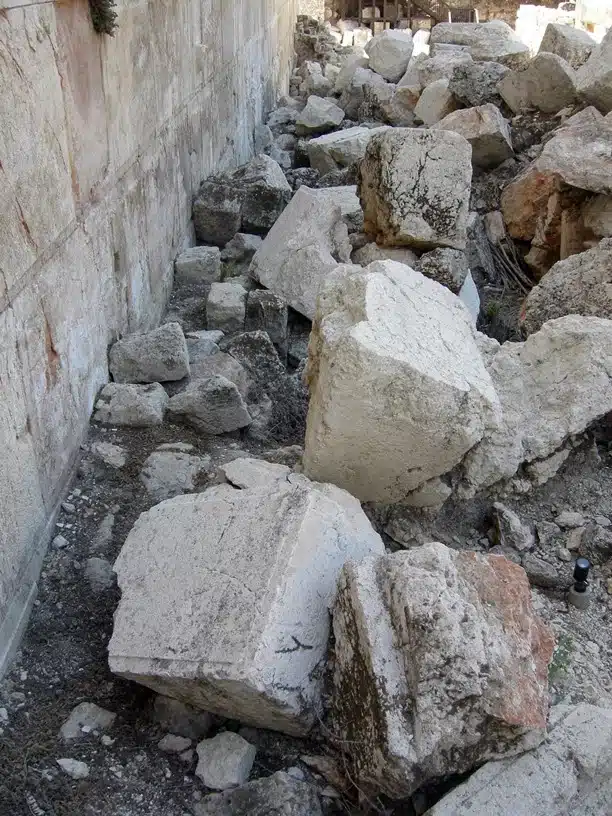
Jerusalem fell. The Temple burned. The people went into exile.
The unfinished foundation of Haggai’s day stood on ground already marked by covenant failure and divine judgment.
Babylon came against Jerusalem in repeated waves. In 586 BC, the city and Solomon’s Temple were destroyed. The people who remained alive were scattered, deported, or left among the ruins.
The exile was not evidence that God had lost control. It was the fulfillment of warnings he had given through his prophets. Yet judgment was not the end of the story. God had also promised to bring a remnant home.
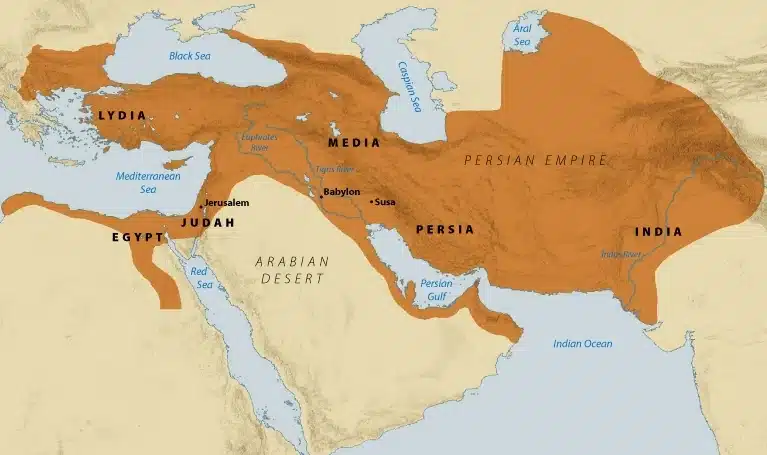
Judah was a small province inside a vast Persian Empire.
The people returned to Jerusalem, but they did not return to political independence.
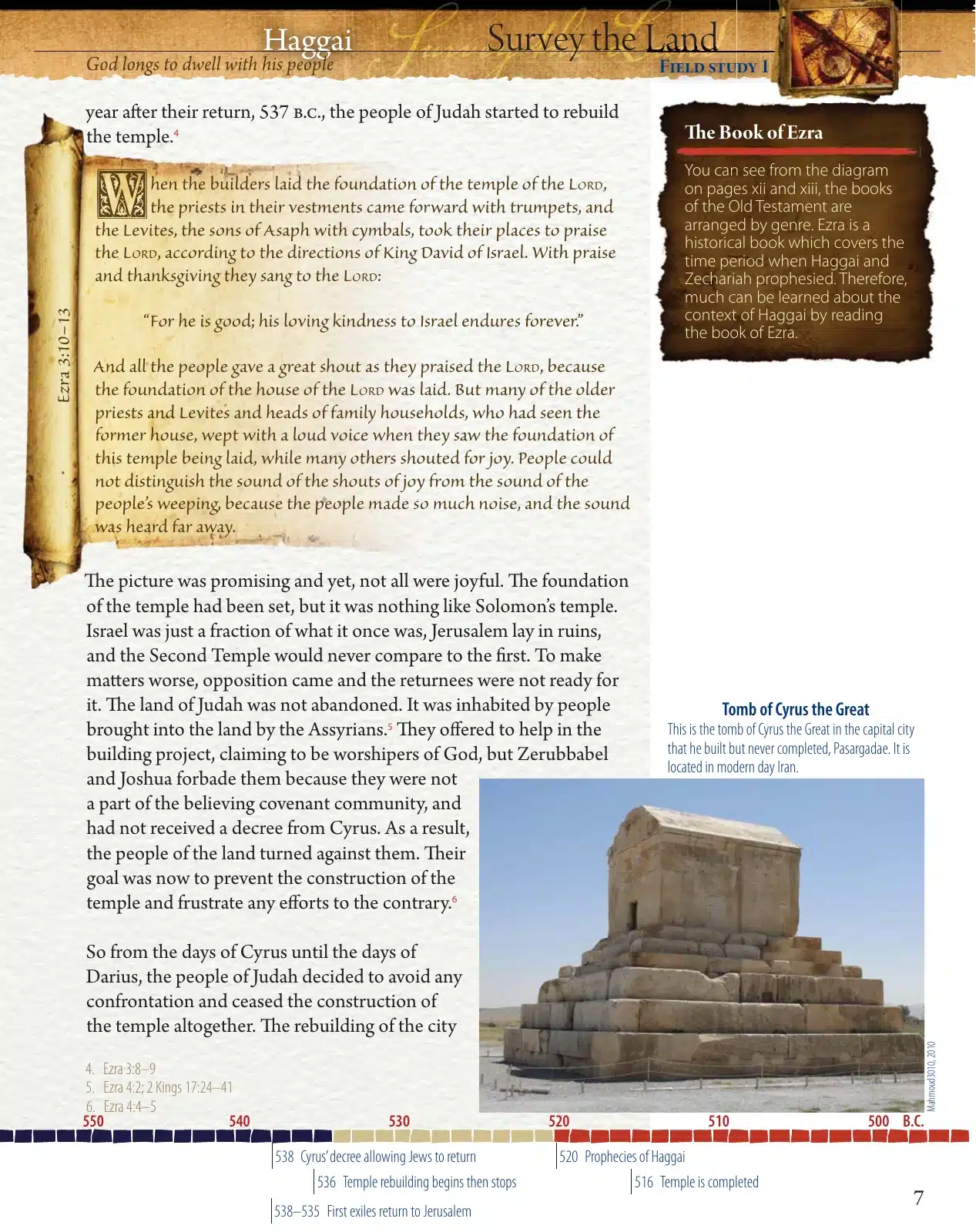
Cyrus had conquered Babylon and authorized displaced peoples to return to their homelands and restore their sanctuaries. Years later, Haggai spoke during the reign of Darius I. The Persian court stood far away, but the LORD ruled over kings, nations, weather, harvests, and history.
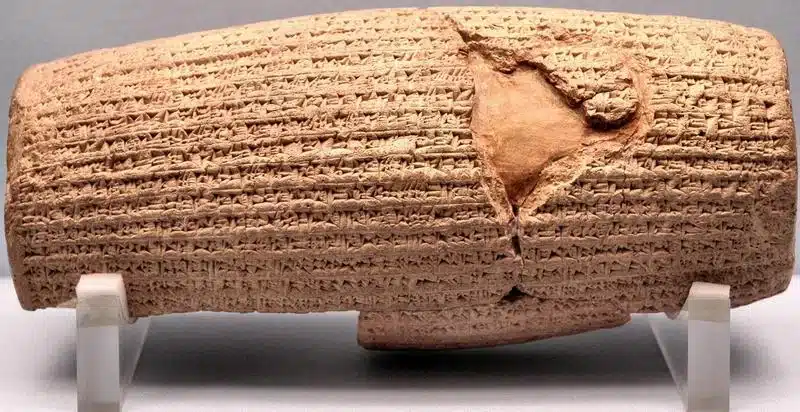
Cyrus the Great
His decree opened the way for Judean exiles to return and rebuild the house of God in Jerusalem.
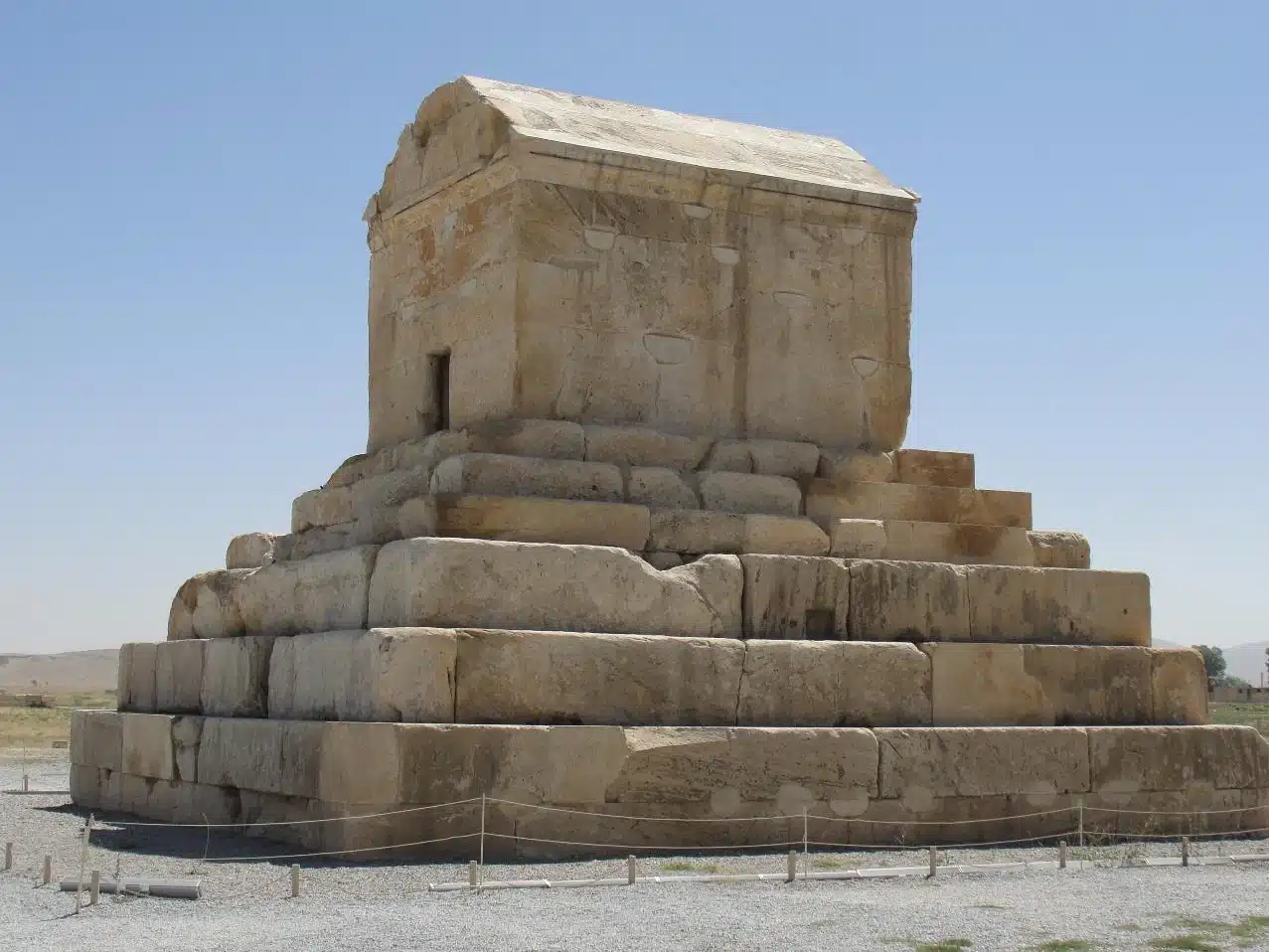
The Return
More than 40,000 people returned in the first recorded wave under leaders including Zerubbabel and Joshua.
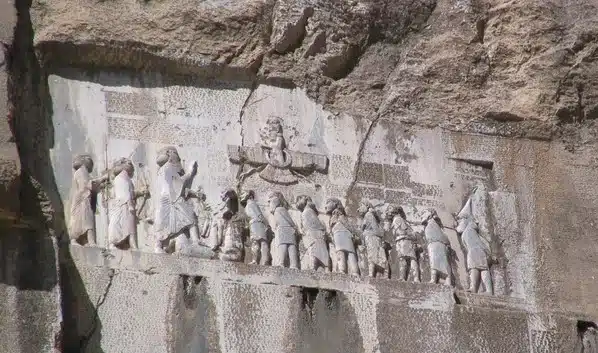
Darius I
Haggai dates every message to the second year of Darius, anchoring the prophecy firmly in 520 BC.
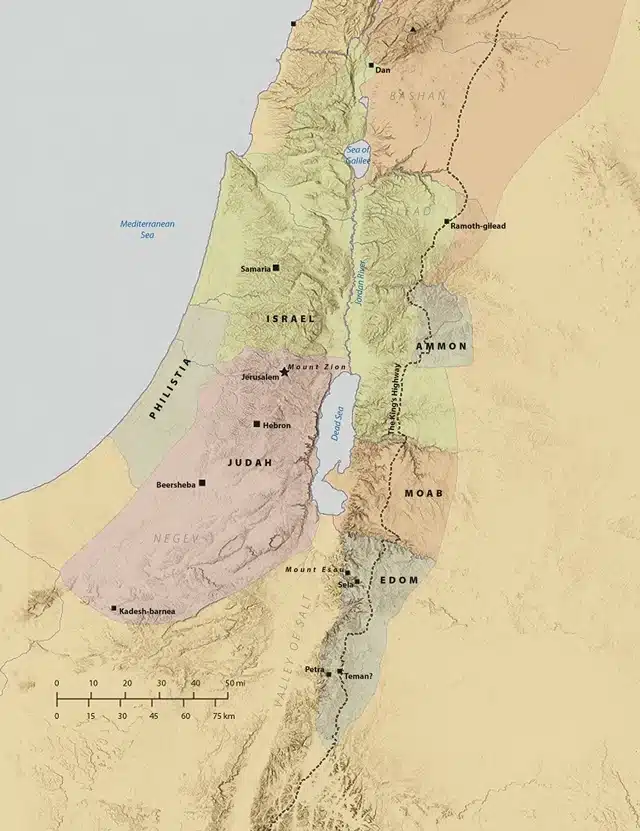
Judea
Jerusalem was the spiritual center of a weak remnant living under foreign rule.
They came home with permission, resources, and hope.
The first years were filled with worship, sacrifice, construction—and tears.
The returned community rebuilt the altar and laid the foundation of the Temple. Some shouted for joy. Others who remembered Solomon’s Temple wept because the new beginning seemed so small.
Then opposition intensified. Work stopped. What began as an interruption became a sixteen-year abandonment.
40,000
RETURN
Opposition explained the pause. It did not justify a generation of neglect.
The people kept saying the time had not yet come to rebuild the Lord’s house.
Meanwhile, time somehow came for their own houses, crops, wages, wardrobes, food, and comfort. Haggai exposes the contrast without condemning homes or honest work. The problem was the order of their loves.
“Is it a time for you yourselves to be living in your paneled houses, while this house remains a ruin?” Haggai 1:4
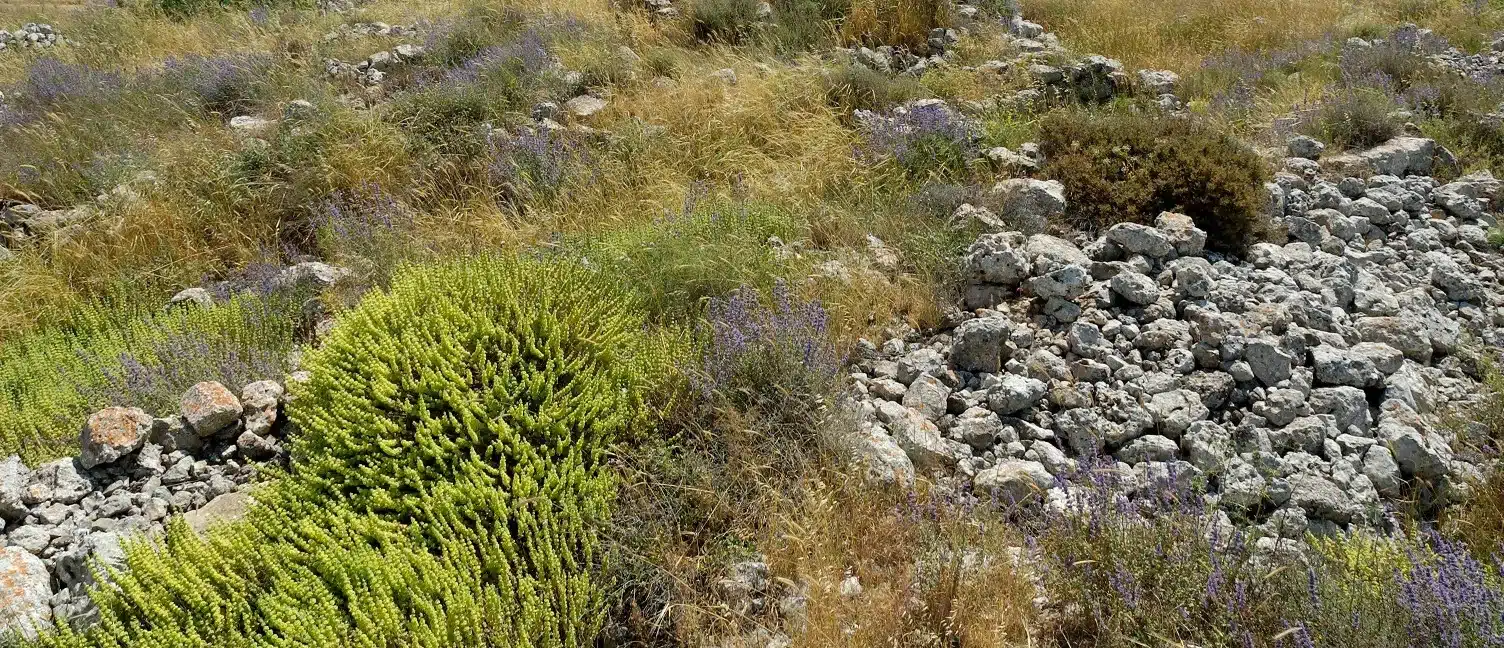
THEIR PANELED HOUSES · HIS HOUSE IN RUINS
One prophet. Two leaders. One discouraged remnant. One sovereign King.
Haggai’s messages are brief because they are directed toward real people who must decide whether they will obey.
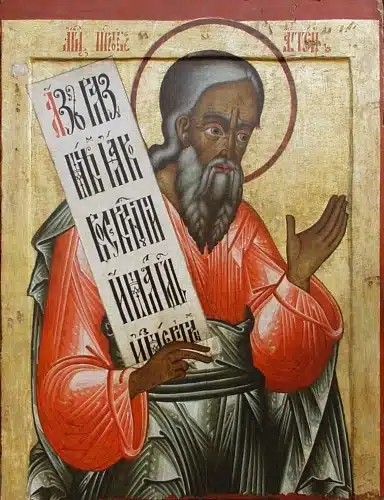
Haggai
Almost nothing is known about the prophet beyond his name and precisely dated messages. His authority rests in the repeated word of the LORD.
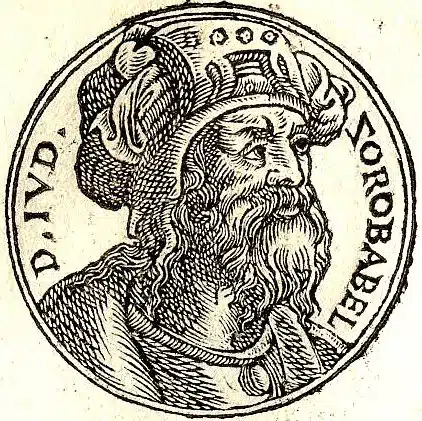
Zerubbabel
A descendant of David serving under Persian authority. He leads the civil community and receives the final promise of the signet ring.
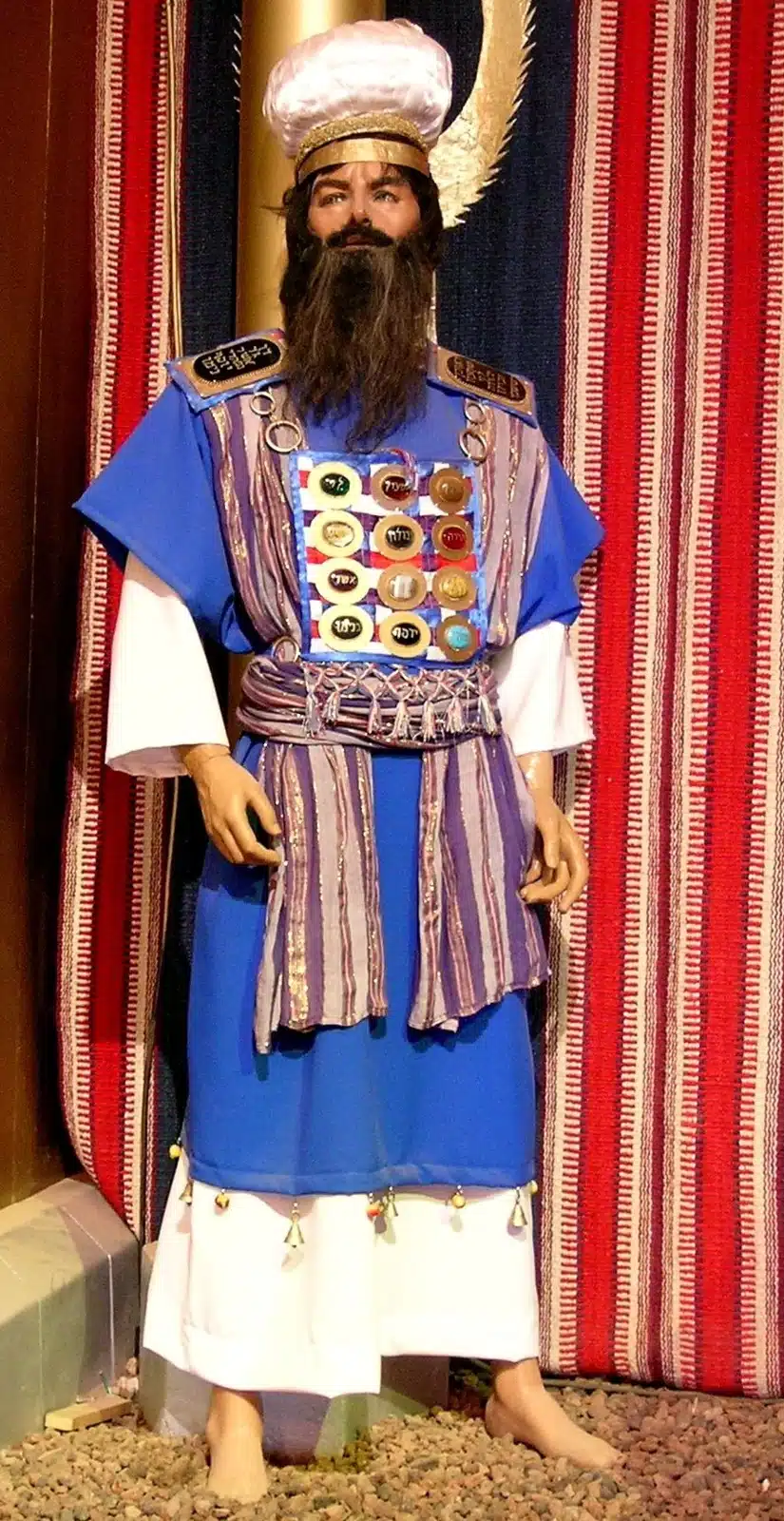
Joshua
The son of Jozadak leads the priesthood. Haggai addresses him directly in the calls to courage, work, and holiness.
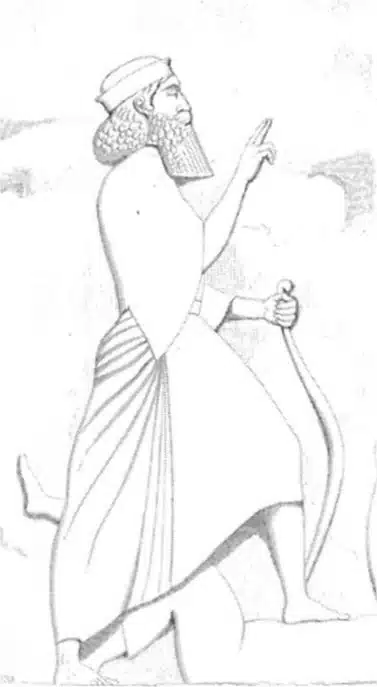
Darius I
Haggai dates his ministry by this Persian king, but the prophecy insists that the LORD of hosts—not Persia—governs the nations.
Artistic representations from the Field Notes; these are not portraits from life.
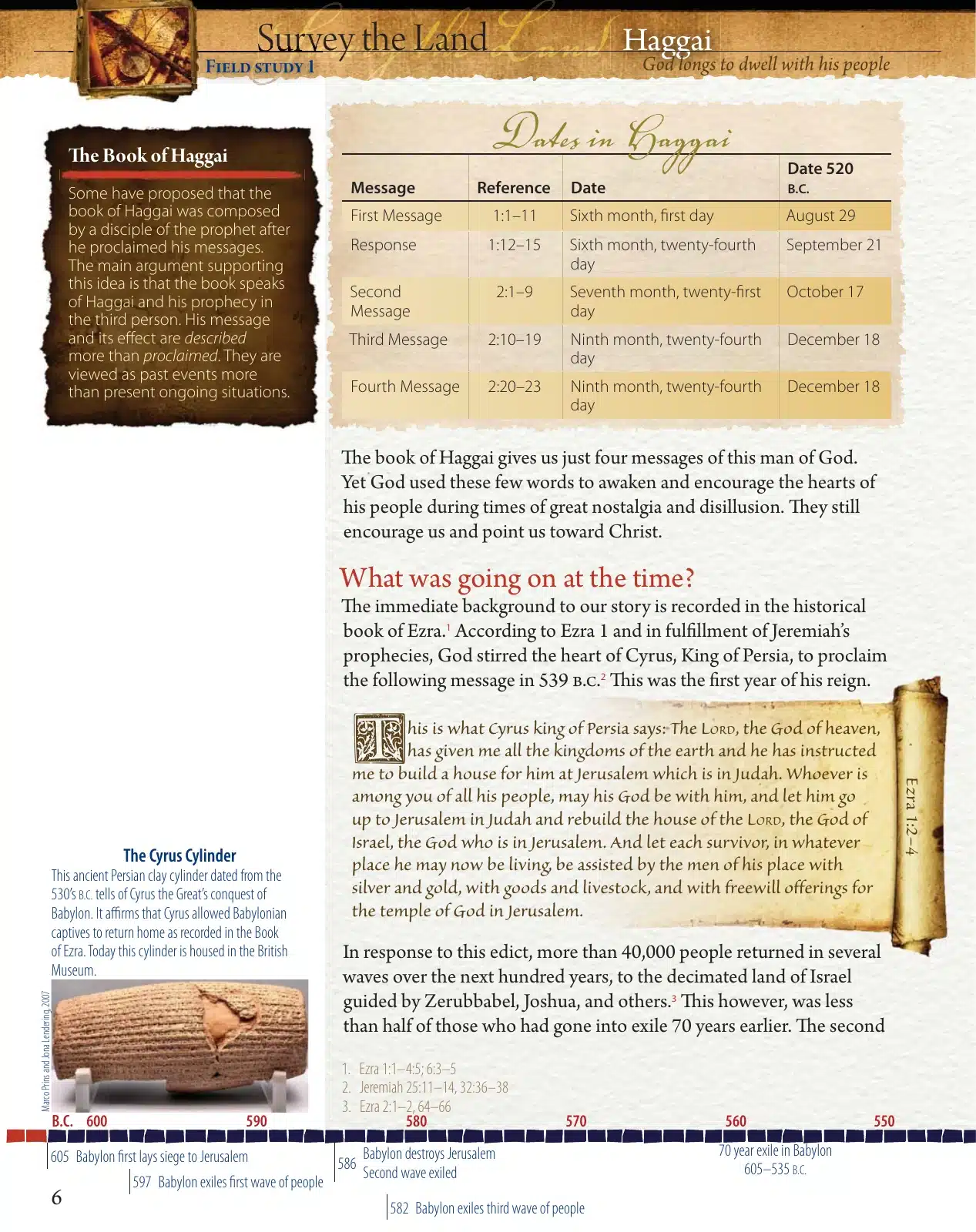
Four messages in less than four months
Haggai’s ministry unfolds with unusual chronological precision.
Message 1 · Reorder your priorities
Give careful thought to your ways. Go up into the mountains, bring down timber, and build the house.
Haggai 1:1–11
The people respond
Zerubbabel, Joshua, and the remnant obey. God says, “I am with you,” and stirs their spirits to work.
Haggai 1:12–15
Message 2 · Be strong and work
Do not despise the small beginning. God’s Spirit remains among his people.
Haggai 2:1–9
Messages 3 and 4 · Holiness and hope
God teaches the remnant about defilement, promises blessing, and chooses Zerubbabel like a signet ring.
Haggai 2:10–23
Give careful thought
to your ways.
The remnant’s frustration was not random. God was using emptiness to expose disordered priorities.
Haggai is not teaching that every hardship can be traced to one personal sin. In this covenant setting, however, God explicitly interprets drought and disappointment as discipline intended to awaken his people.
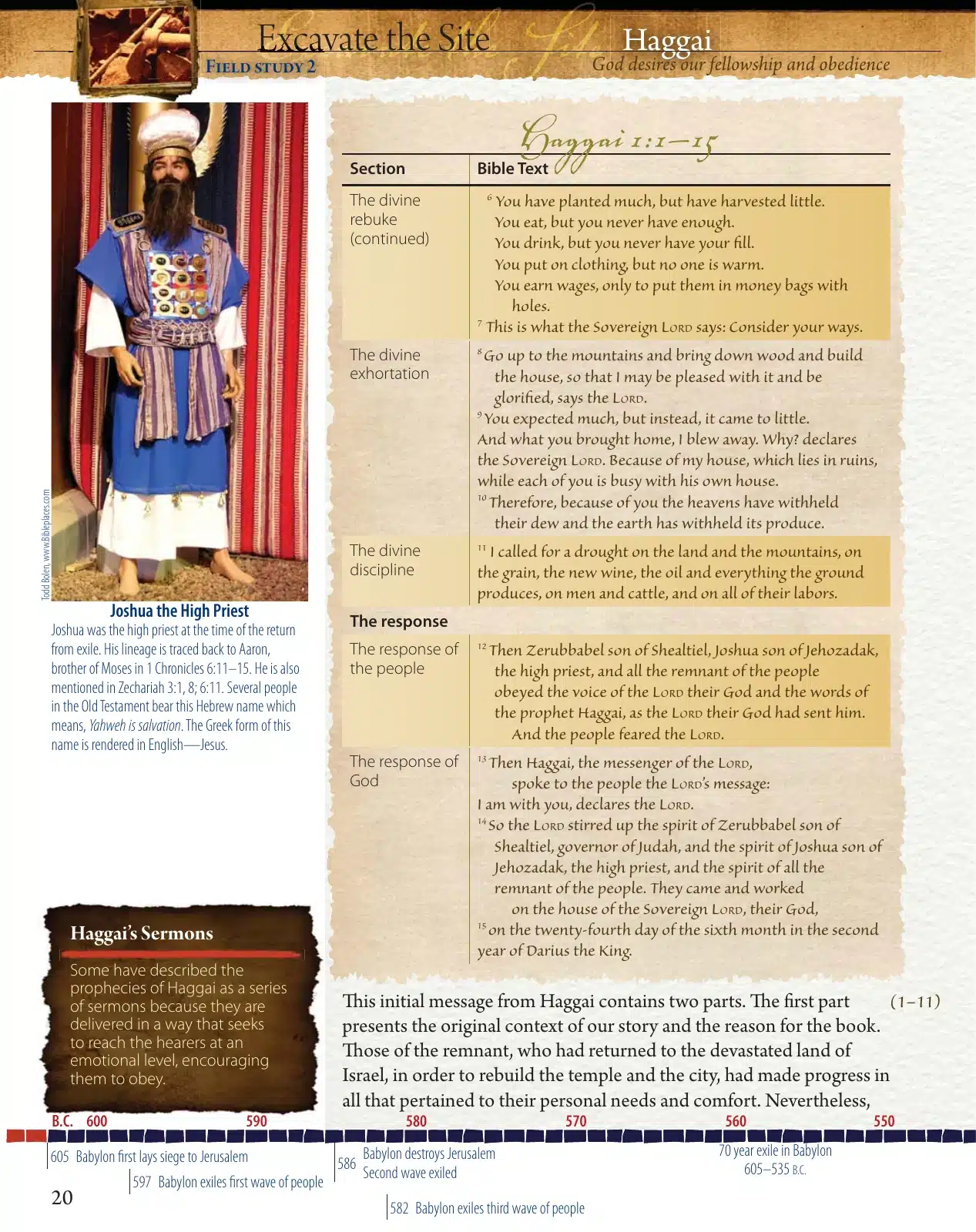
Haggai’s first message did not end in resistance.
The remnant heard the word of the LORD and changed direction.
God did more than command the work. He stirred the spirits of Zerubbabel, Joshua, and the whole remnant. Twenty-three days after Haggai’s first message, the rebuilding began again.
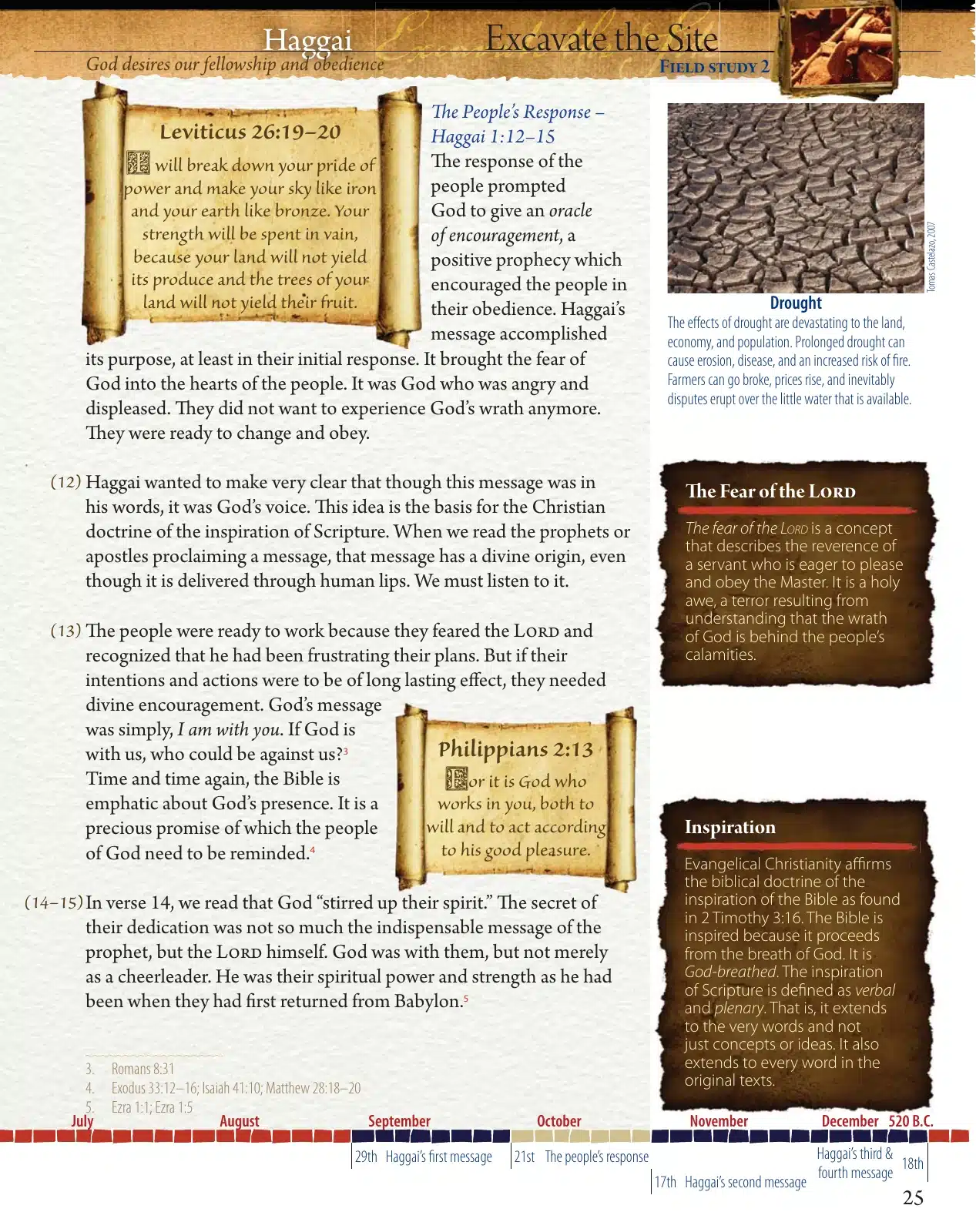
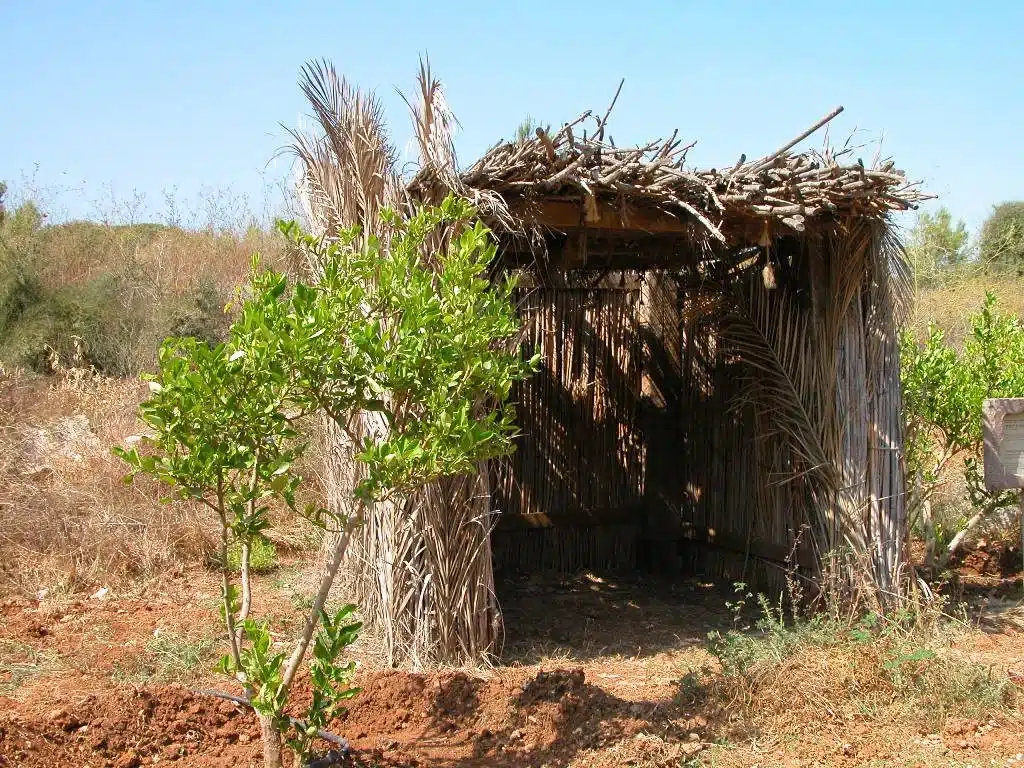
The old Temple remembered former glory.
Be strong and work. Do not fear.
Some of the oldest returnees remembered Solomon’s Temple. The new work looked like nothing beside it.
Comparison threatened to drain their courage. Haggai did not deny the visible difference. He redirected their attention from the size of the structure to the presence of the LORD.
“Be strong, all you people of the land,” declares the LORD, “and work. For I am with you.” Haggai 2:4
The building looked small. God’s promise reached beyond it.
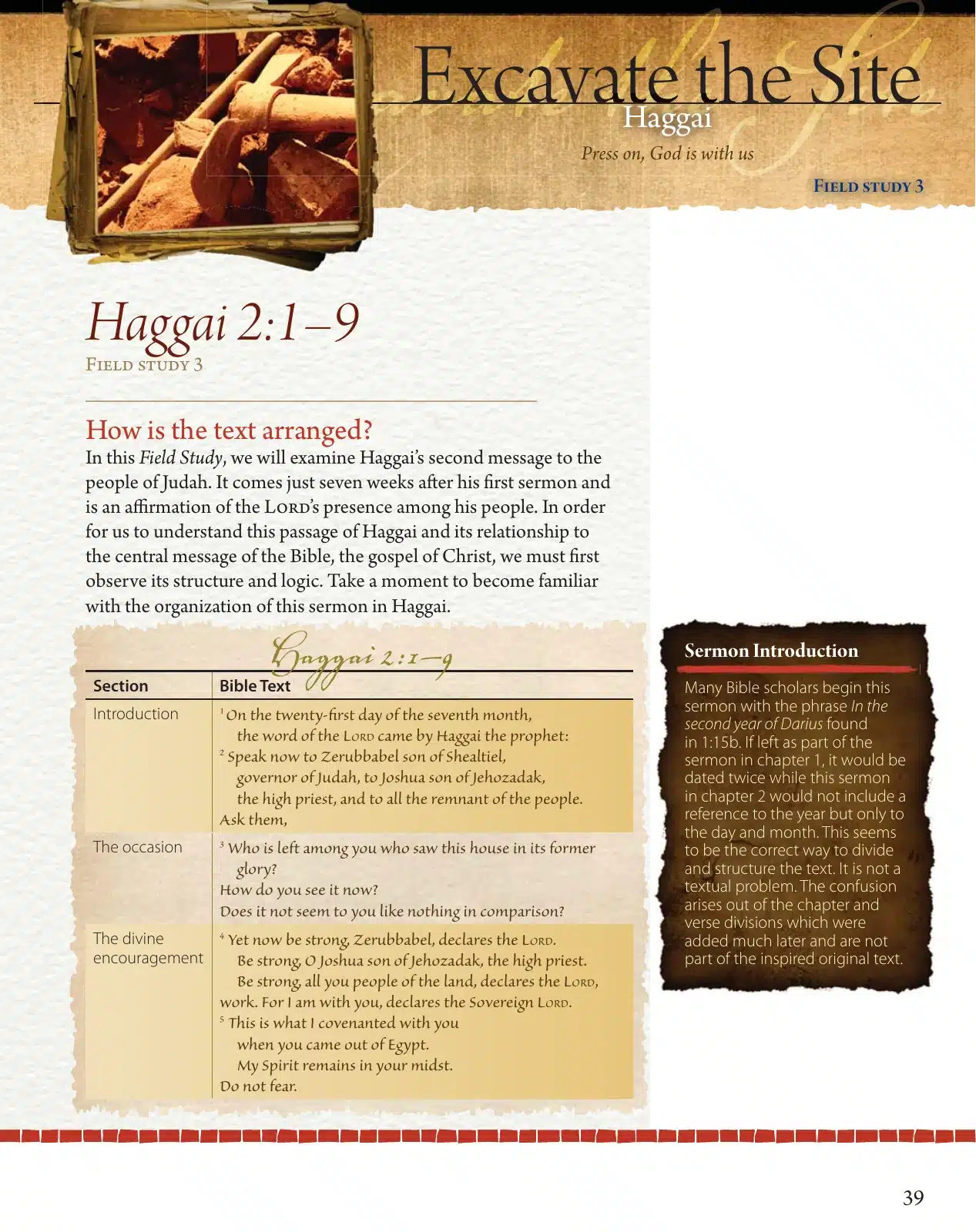
The LORD of hosts owns the silver and gold, shakes the nations, fills his house with glory, and gives peace.
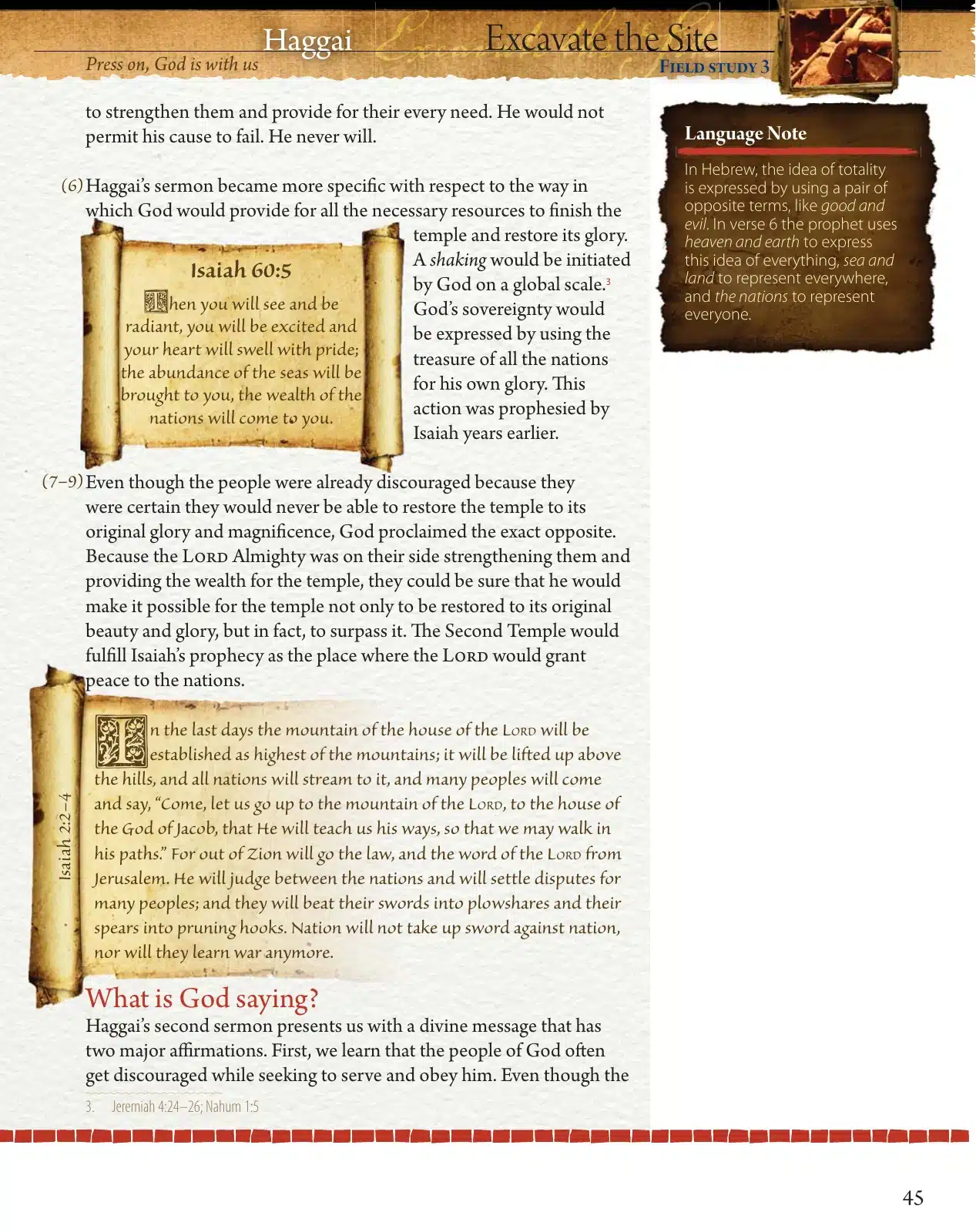
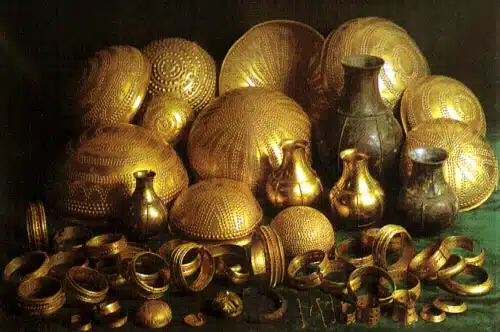
OF THIS
PRESENT HOUSE
Selected Field Notes pages tracing the promise of greater glory.
Holiness cannot be carried like cargo.
Haggai asks the priests two case questions. Their answers expose the spiritual condition of the community.
Case 1 · Holiness
Case 2 · Defilement
Religious work cannot make an unclean heart holy. The people needed more than a finished building; they needed faithful obedience before a holy God.
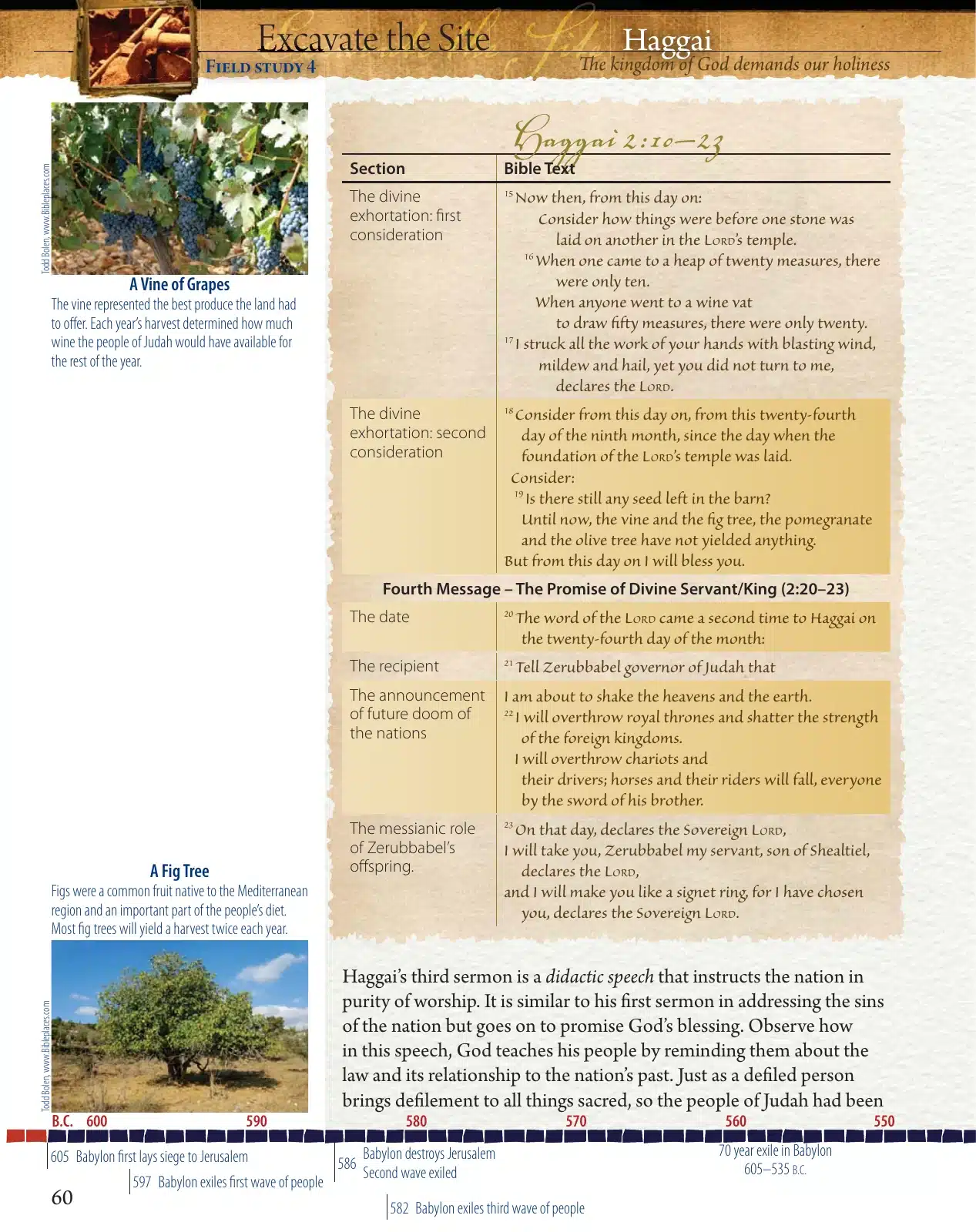
The seed was still in the ground.
God announced blessing before the vines, figs, pomegranates, olives, or grain visibly changed.
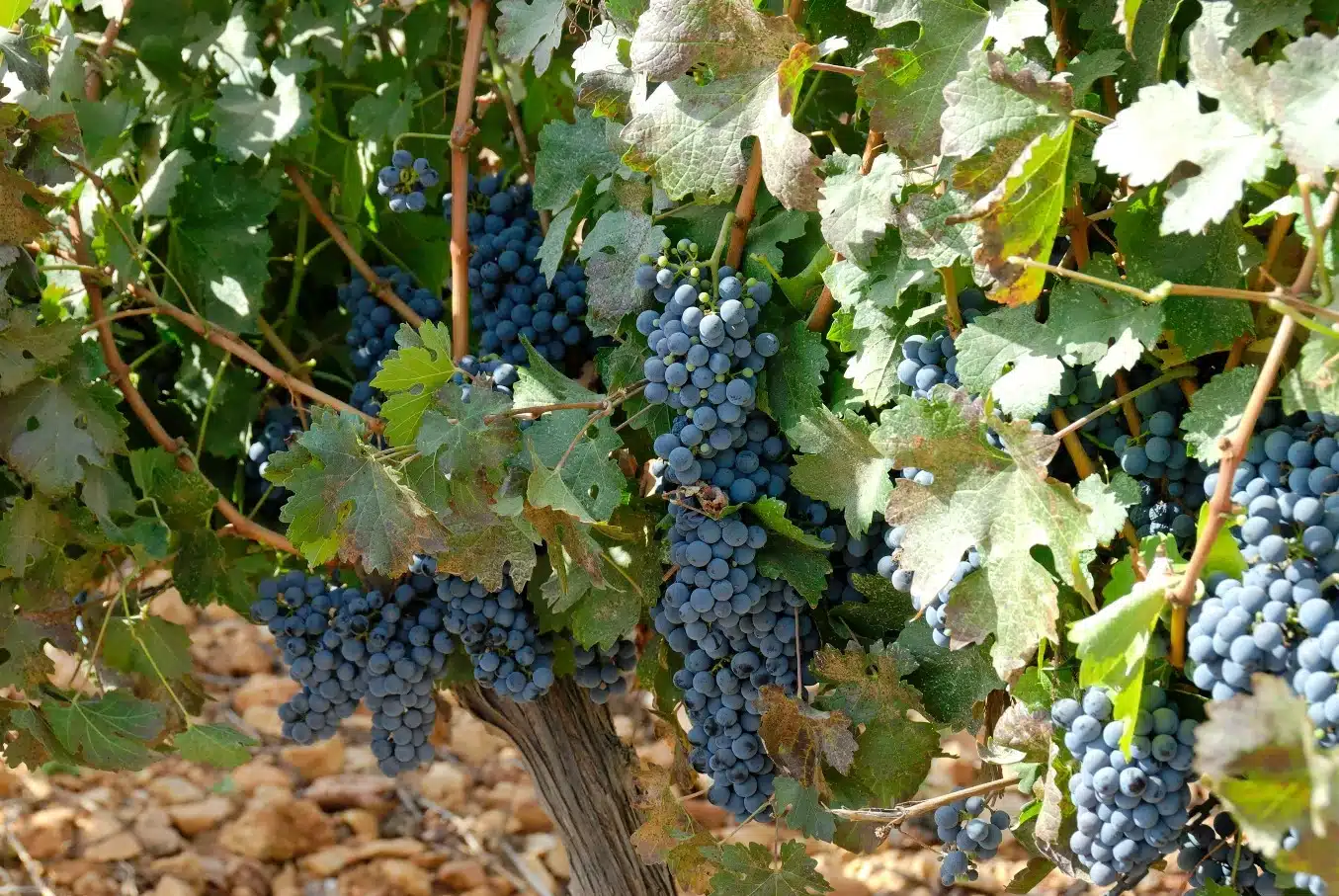 Vine
Vine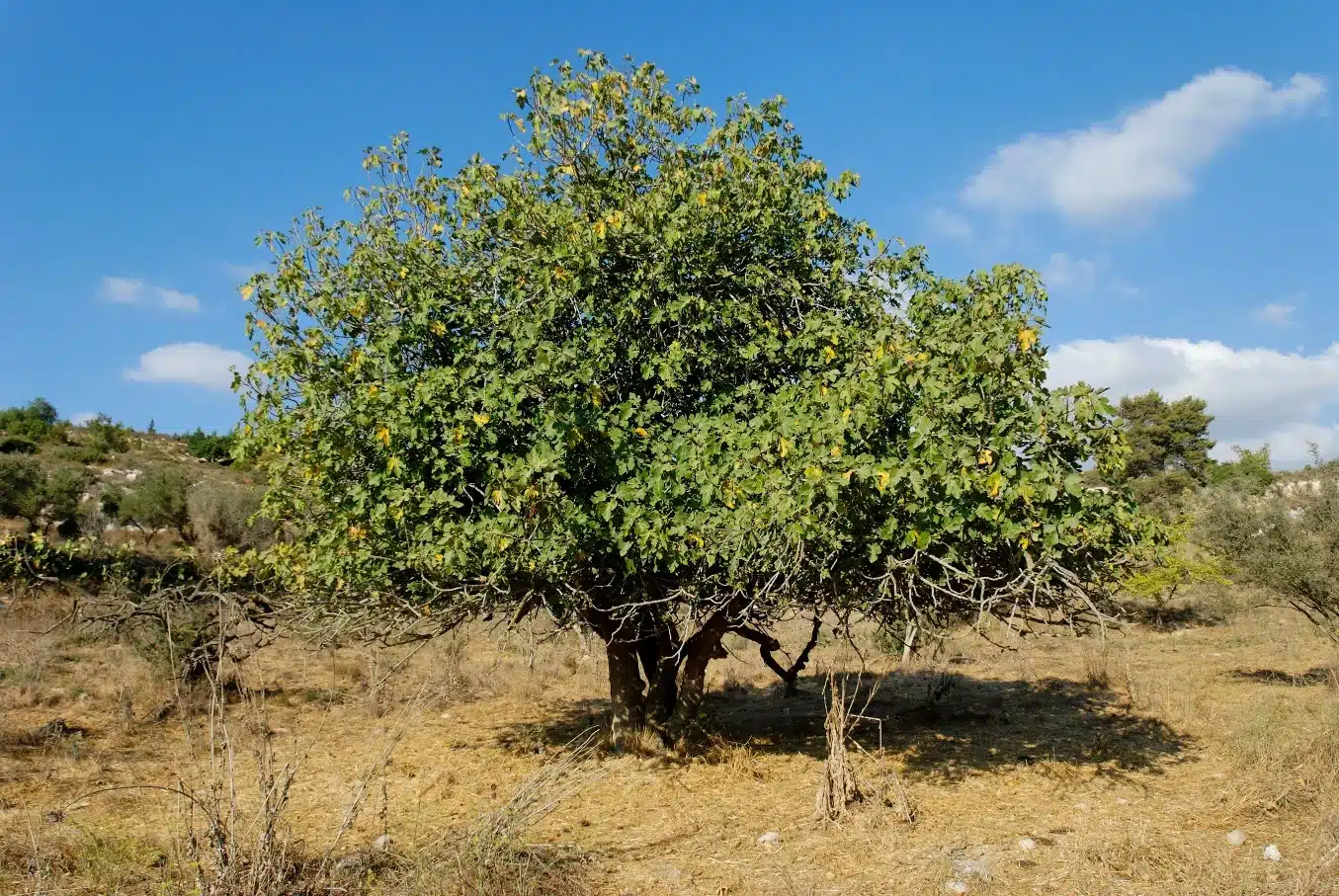 Fig
Fig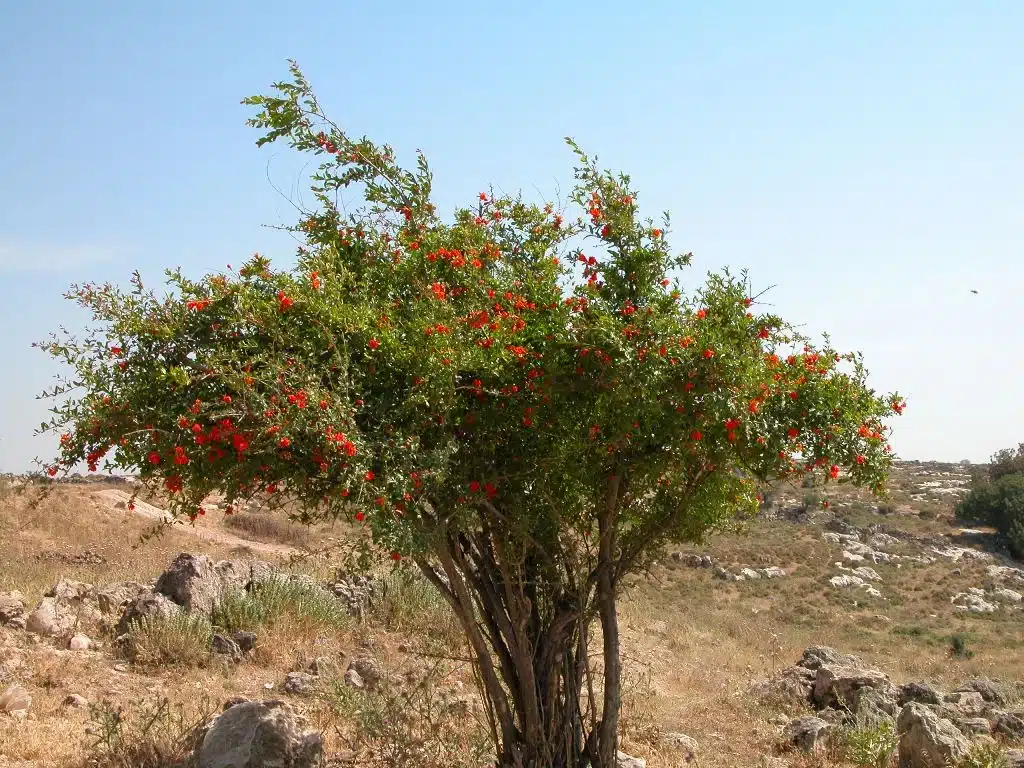 Pomegranate
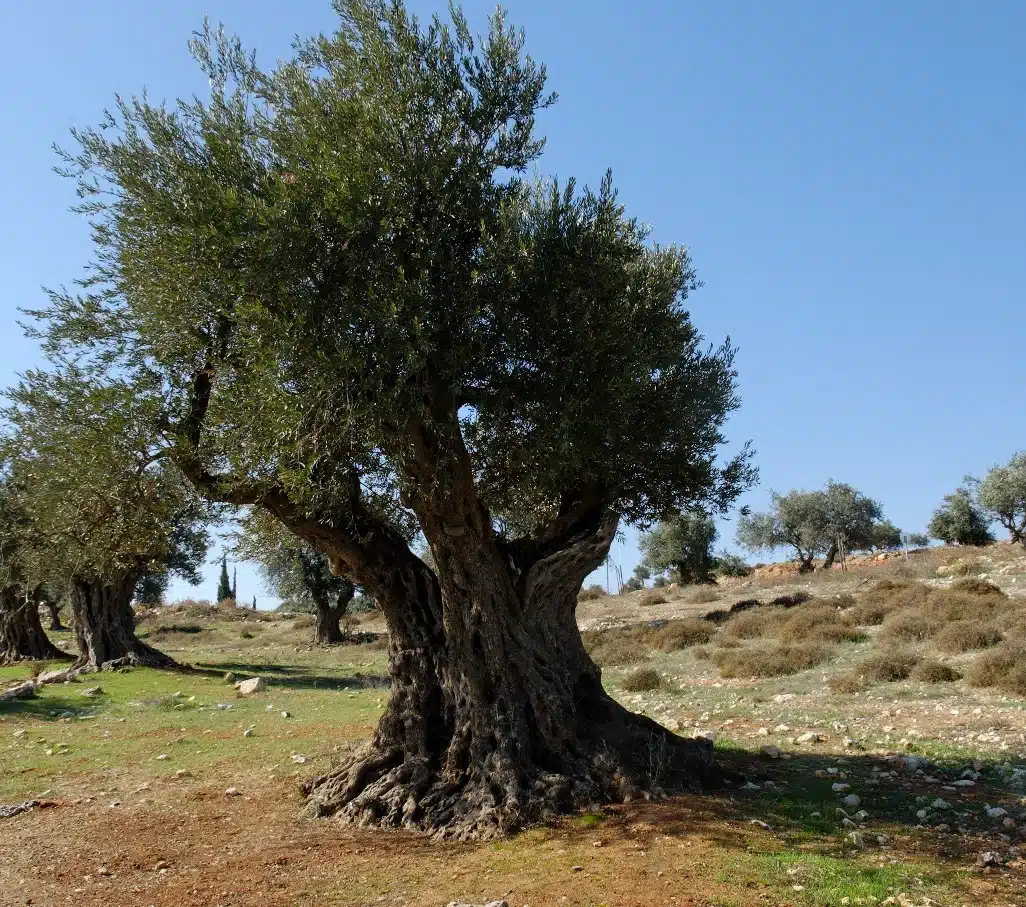 Olive
Olive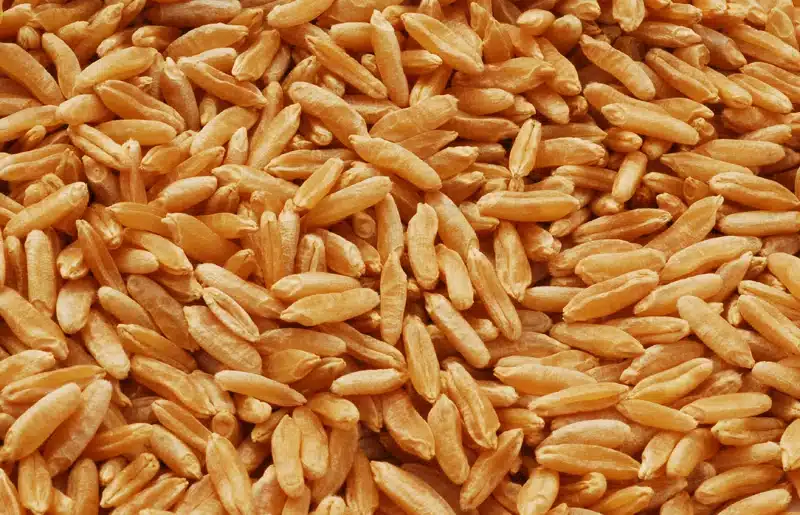 Grain
Grain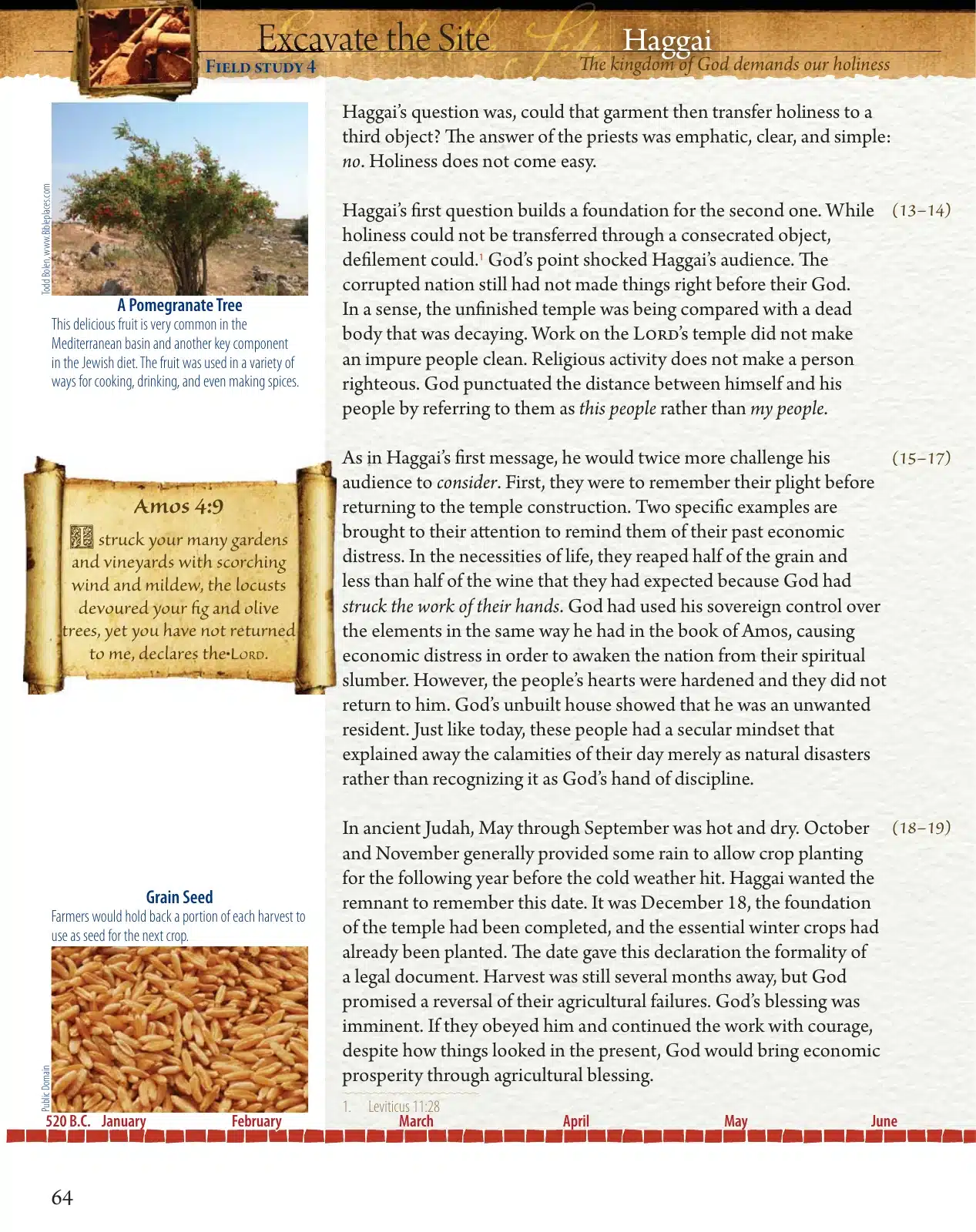
PROMISE FIRST. VISIBLE HARVEST LATER.
CHOSEN
YOU
Zerubbabel becomes a sign of a kingdom still to come.
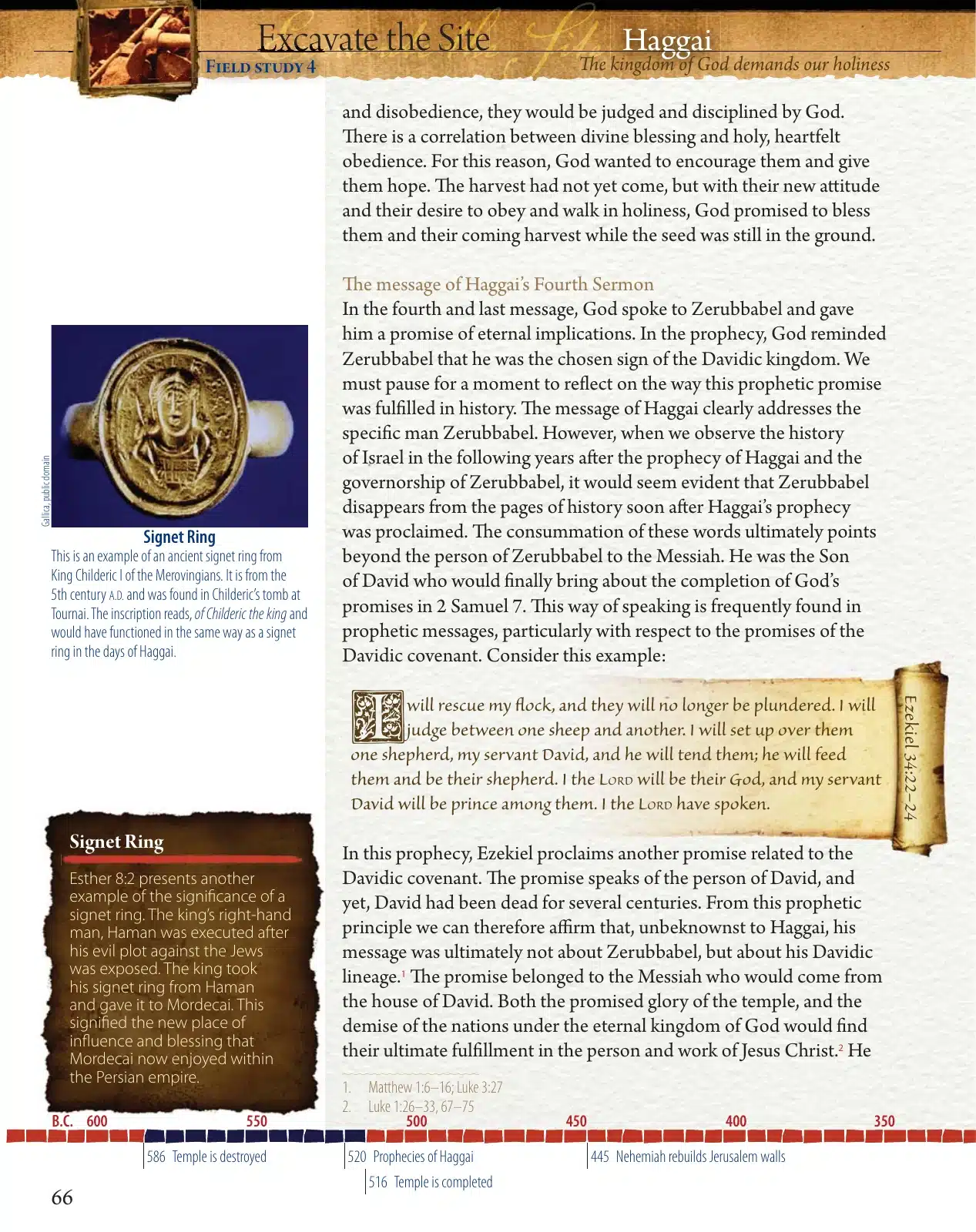
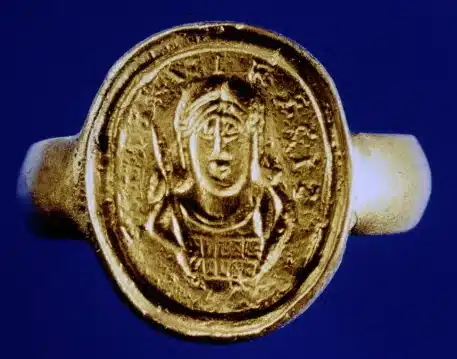
A signet ring carried the authority and identity of a king. God’s promise to Zerubbabel keeps the line of David in view while empires rise and fall.
Zerubbabel was governor, not king. Persia still ruled Judea. Yet Haggai promises that the LORD will shake thrones and kingdoms and make this descendant of David like his signet ring.
“I will make you like my signet ring, for I have chosen you,” declares the LORD Almighty. Haggai 2:23
The dwelling place of God is the destination of the whole story.
Haggai’s Temple belongs inside a movement that begins in creation, centers on Jesus Christ, forms a holy people, and culminates in God’s eternal presence.
Tabernacle
God travels with Israel and dwells among his people.
Solomon’s Temple
God’s glory fills the house in Jerusalem.
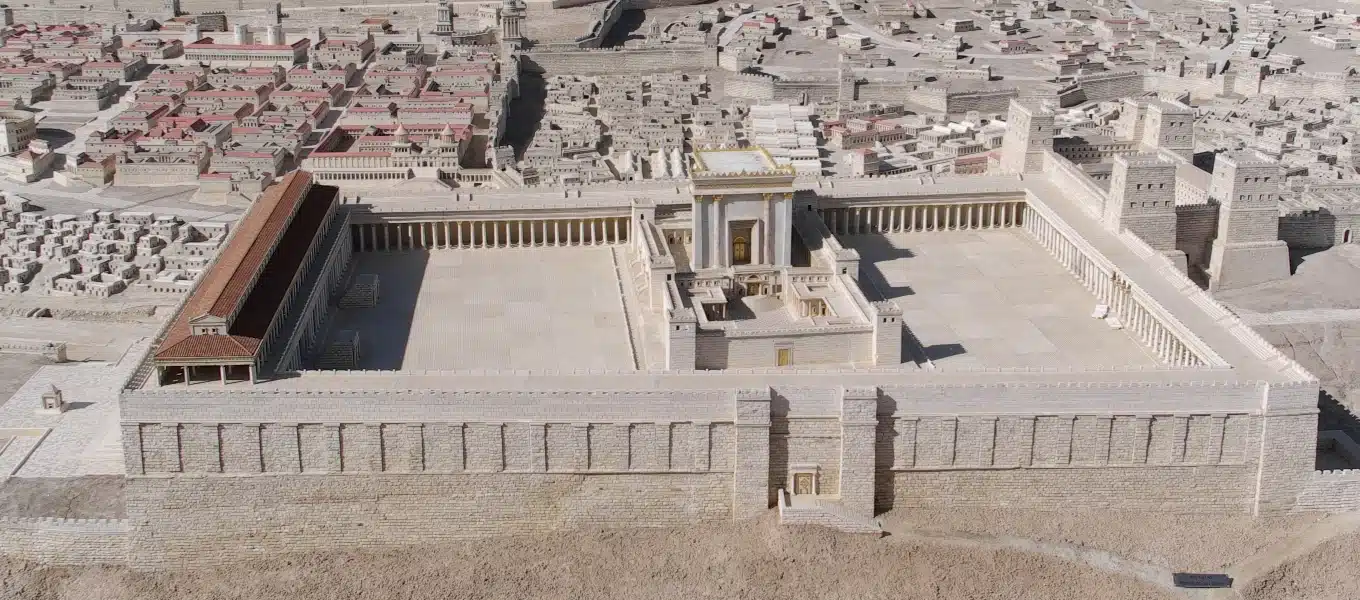
Second Temple
Rebuilt after exile, later expanded, and destroyed in AD 70.
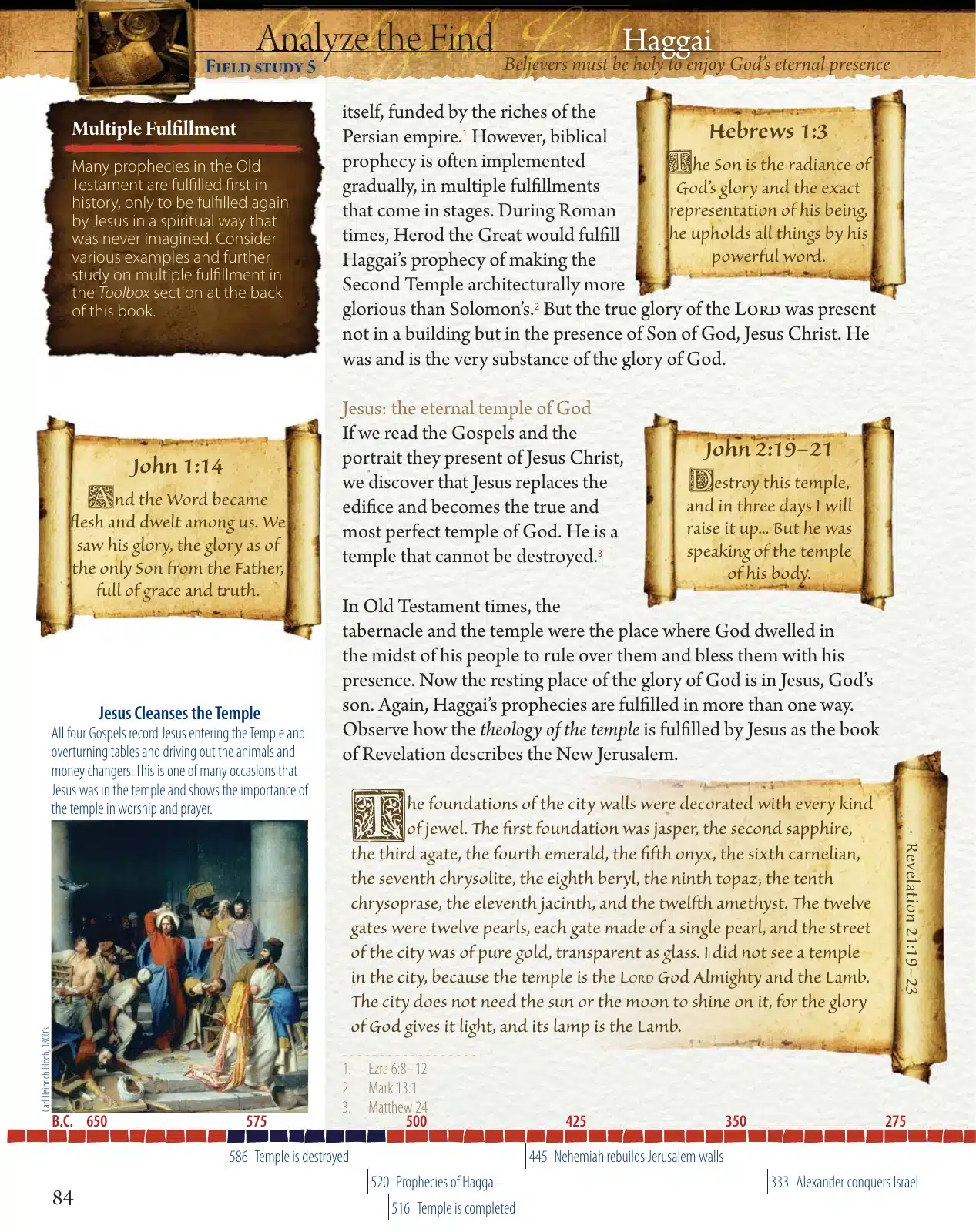
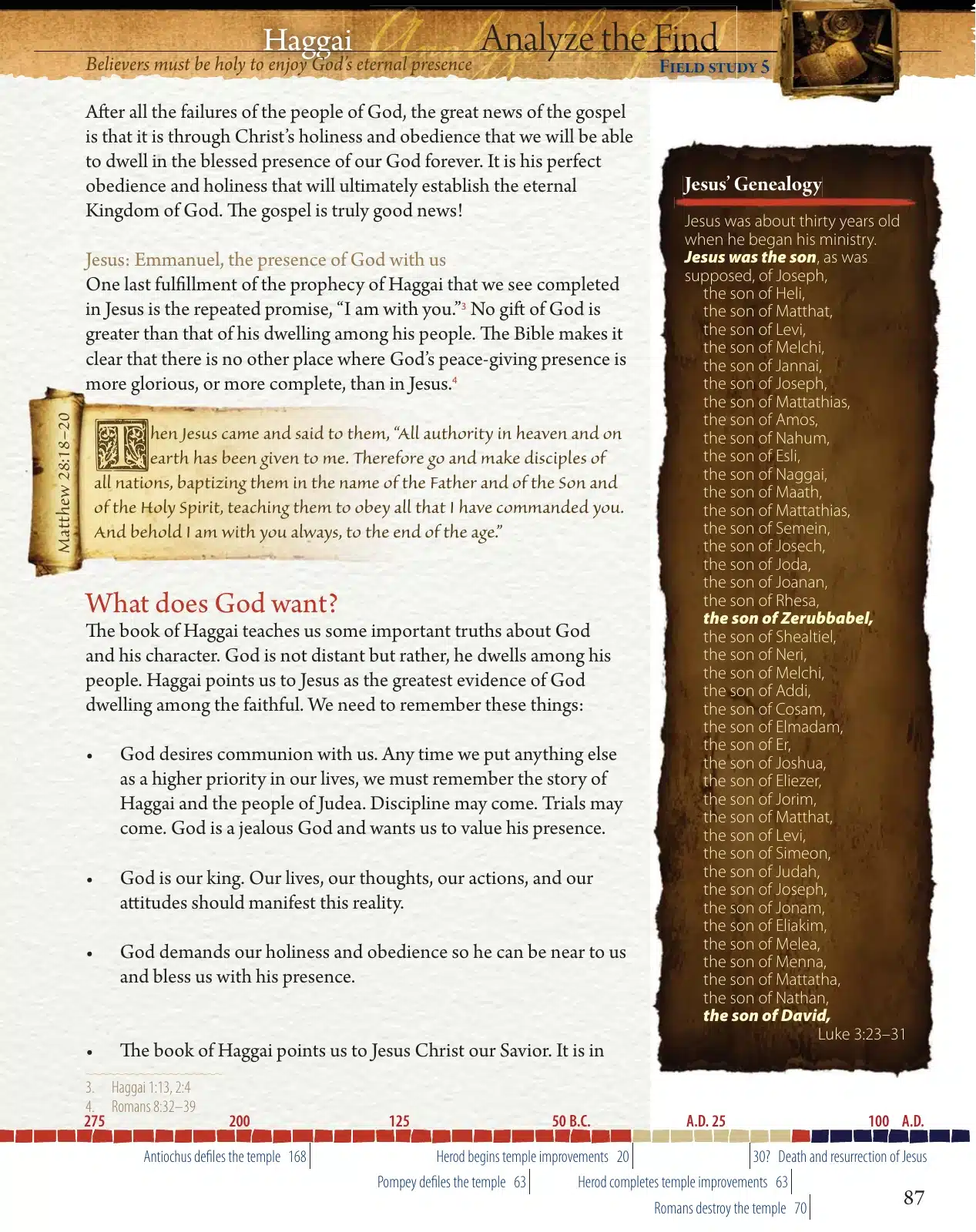
Jesus Christ
Emmanuel is God with us and the true meeting place between God and humanity.
The Church
Believers are joined in Christ as a holy Temple in which God lives by his Spirit.
New Creation
God dwells with his people forever; his presence is their light and blessing.
The model shows the later Second Temple complex, not Zerubbabel’s original structure.
Five Field Studies through Haggai
The study begins with the history of God’s presence, excavates all four dated messages, and ends by placing Haggai in the whole story of Scripture.
God longs to dwell with his people
Haggai background
God desires our fellowship and obedience
Haggai 1:1–15
Press on, God is with us
Haggai 2:1–9
The kingdom of God demands our holiness
Haggai 2:10–23
Believers must be holy to enjoy God’s eternal presence
Haggai in Scripture
See, trace, mark, discuss, and remember.
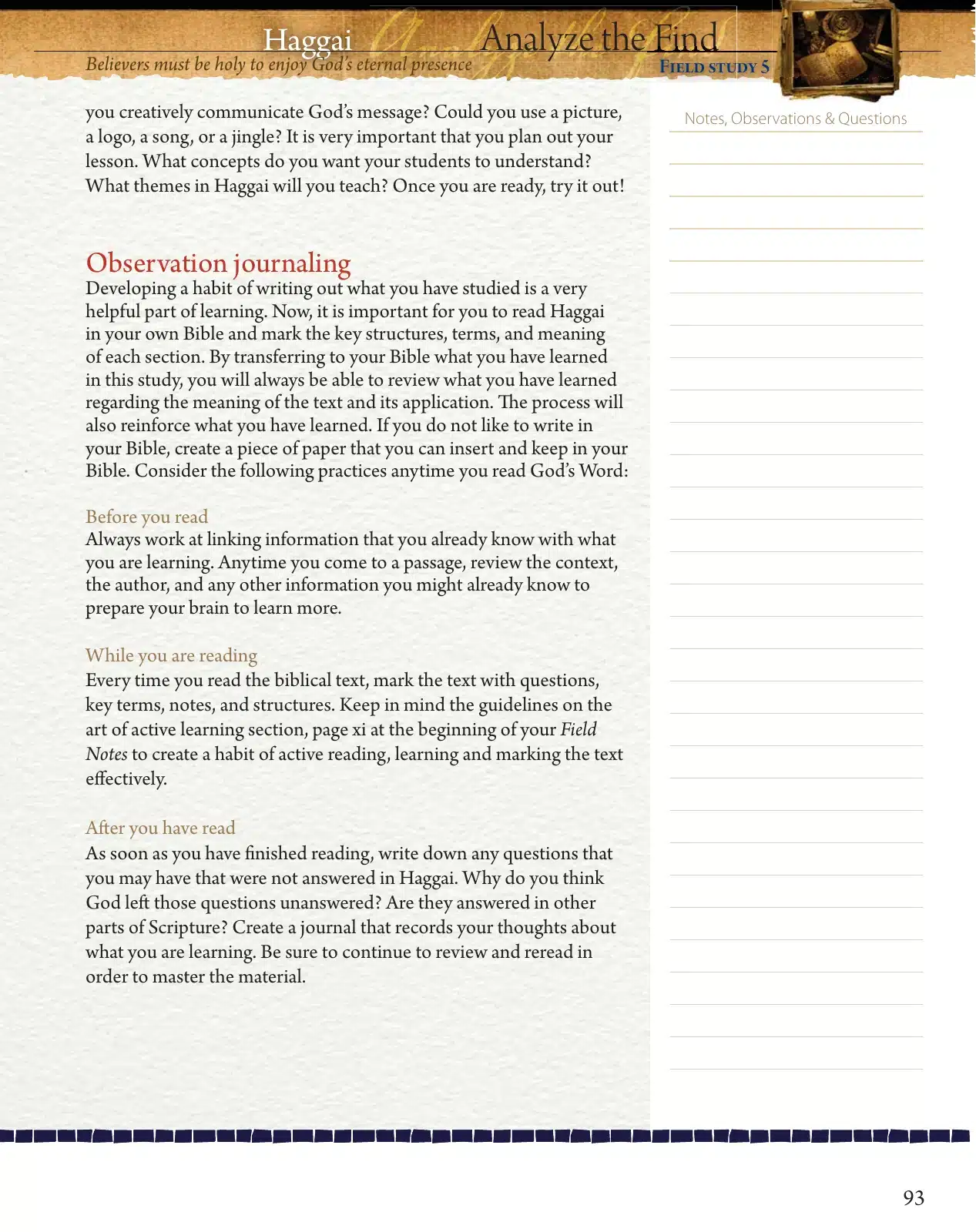
DISCOVERIES + JOURNALING
TEMPLE + CHRIST + GRAND STORY
Open the Haggai Field Notes
This preview moves from exile and return through Haggai’s four messages to Jesus Christ and the eternal presence of God.
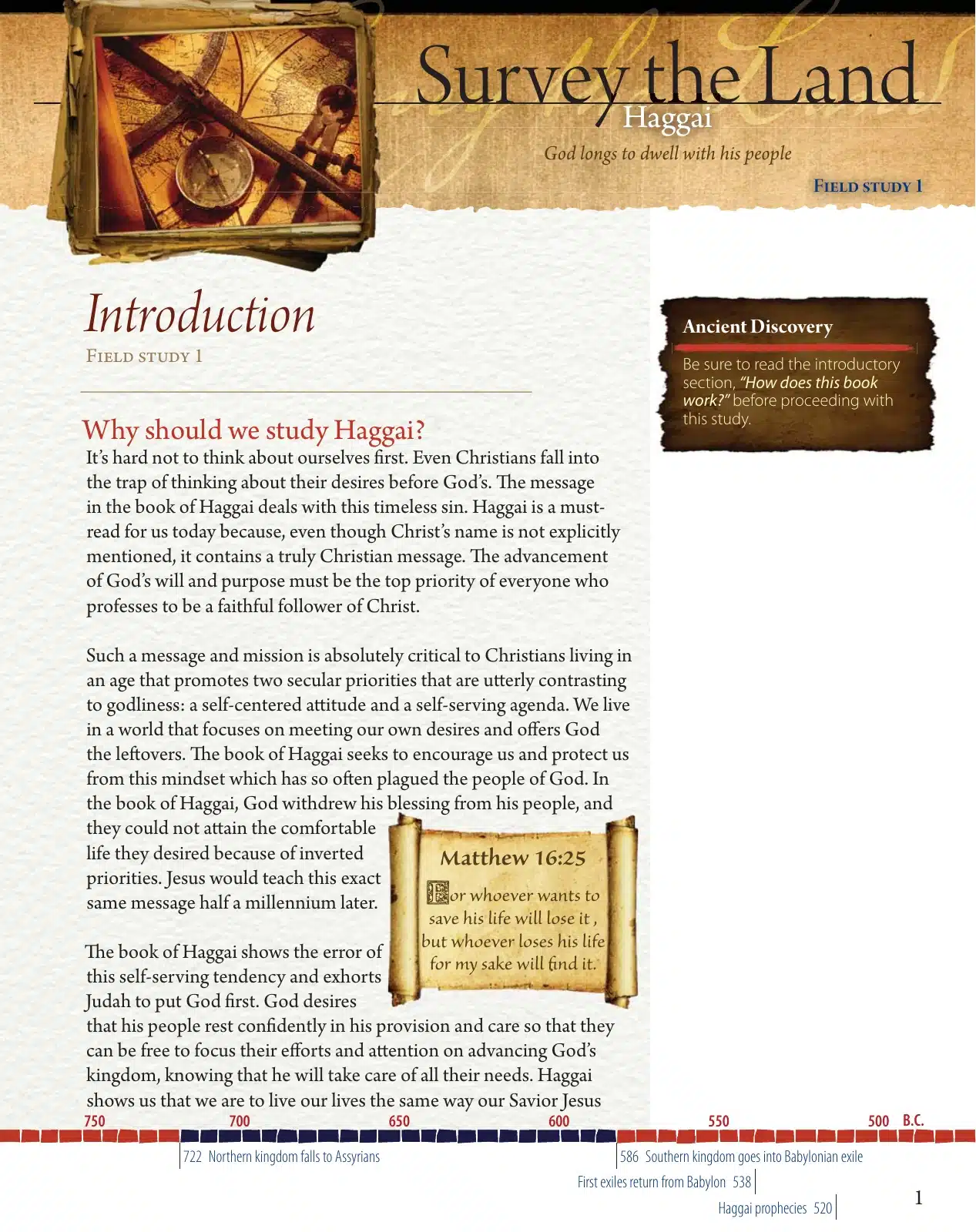
32 selected pages · Preview excerpts are not consecutive.
Use the arrows or swipe to turn pages. Fullscreen, zoom, search, and PDF download are available inside the viewer.
What are you building first?
Stand among the unfinished stones of Jerusalem. Hear the prophet call a weary remnant to courage, obedience, holiness, and hope. Then follow the story beyond the Second Temple to Jesus Christ and the day when God will dwell with his people forever.
WITH
YOU