


Philippians Bible Study
MISSION BRIEF
Your destination
| PLACE | Philippi in Macedonia and Paul’s imprisonment in Rome |
|---|---|
| AUTHOR | The apostle Paul |
| AUDIENCE | A beloved church living inside a Roman colony |
| WRITTEN | Most likely from Rome around AD 62 |
| CHALLENGE | How should citizens of heaven live on Roman soil? |
| JOURNEY | Survey, seven excavations, final analysis, and Discoveries |
YOUR FIELD NOTES
Choose how you will
explore Philippians
The same deep study, in the format that fits your journey.
Printed Field Notes
- 148 full-color pages
- Nine Field Studies
- Maps, timelines, charts, and photographs
- Space to write, reflect, and discuss
Original price was: $29.95.$19.95Current price is: $19.95.Add to cart

Why Study Philippians?
This is not merely a letter about feeling joyful.
Paul wrote from prison to believers pressured by Roman culture and divided by self-centered ambition inside the church.
Joy fills Philippians, but joy is not the letter’s shallow slogan. It grows from confidence that God is at work, commitment to the progress of the gospel, fellowship with other believers, and a life centered on Jesus Christ.
Philippians asks whether God’s people will blend into the values around them or live together as a visible colony of heaven. The deepest question is not, “Am I happy?” It is:
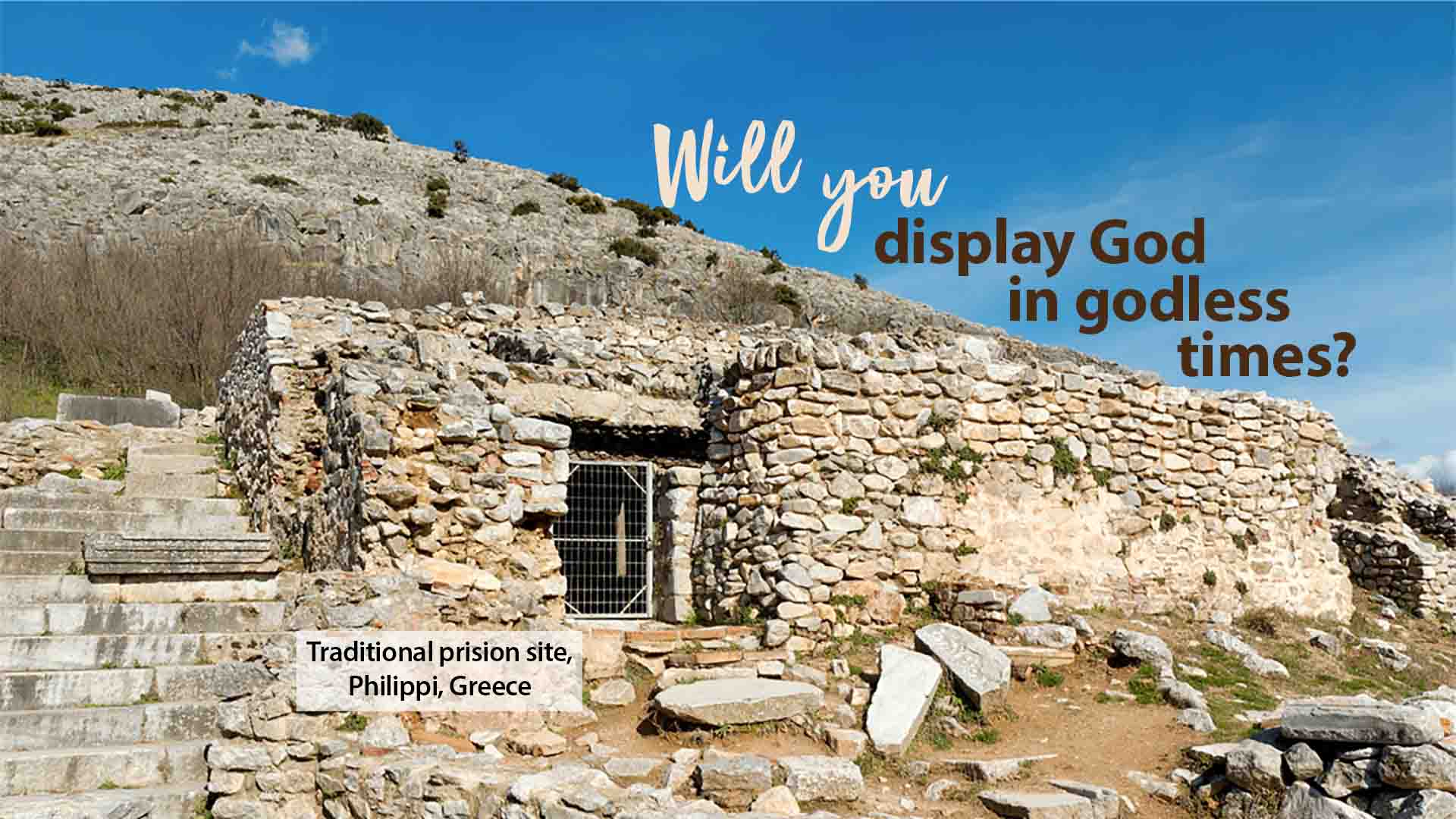
Will my life display God in godless times?
The central challenge of the study
The surrounding culture
The way of status
- Protect your standing
- Promote yourself
- Seek comfort and recognition
- Blend in when faith becomes costly
- Let Caesar define power
The gospel-shaped life
The mind of Christ
- Stand firm together
- Count others above yourself
- Serve at personal cost
- Advance the gospel through hardship
- Confess Jesus Christ as Lord
Survey the Land
Enter the Roman world of Philippians
Before the letter can speak with its full force, we must recover the world Paul and the Philippians already knew.

From Jerusalem to Macedonia
A strategic city in a vast empire
Philippi stood in Macedonia near the northern Aegean Sea. Rome lay far to the west across the Adriatic. Jerusalem lay far to the southeast. Imperial roads and sea routes connected them all.
Paul reached Philippi during his second missionary journey after the gospel was directed into Macedonia. Here he planted the first church recorded in present-day Europe.
- Province
- Macedonia
- Main road
- The Via Egnatia
- Biblical arrival
- Acts 16:6-40
The Road Through Philippi
Walk the Via Egnatia
Armies, merchants, officials, missionaries, and messengers moved through Philippi on one of Rome’s greatest roads.
The Via Egnatia crossed the southern Balkans from the Adriatic toward Byzantium. Philippi guarded a natural passage between mountains to the north and the Aegean coast to the south. Whoever controlled the city controlled movement through the region.
The road later carried news, gifts, coworkers, and Paul’s letter between Philippi and Rome. The study estimates that the return journey of Epaphroditus covered roughly 800 miles by road and sea.


The road still runs through the ruins.
The physical setting turns Paul’s letter from an abstraction into a message carried through a real landscape.
Rome in Macedonia
A Rome away from Rome
Philippi’s public buildings, privileges, and loyalties expressed the identity of a Roman colony.

Philippi Today
The architecture declared who ruled.
The theater, forum, roads, and monuments made Roman power visible in everyday life.
Philip II takes the city
Philip of Macedon captured Krenides, strengthened the settlement, and renamed it Philippi.
The Battle of Philippi
Octavian and Antony defeated Brutus and Cassius. Roman veterans settled in the city.
More veterans arrive
After Antony’s defeat, Octavian’s soldiers strengthened the city’s Roman character.
Colony identity shapes the church
Citizens valued Roman privilege and public standing. Paul used that familiar identity to explain a greater citizenship.
Acts 16:6-40
The gospel enters Philippi
Paul’s arrival brought him into contact with a businesswoman, an enslaved girl, city officials, prisoners, and a jailer. Through these events God established a church in Roman Macedonia.
Macedonia
God redirected Paul and his companions across the Aegean into a new region.
Lydia
Beside the river, Lydia heard the gospel, believed, and opened her home.
Conflict
After Paul freed an enslaved girl from an evil spirit, her owners stirred the city against him.
Prison
Paul and Silas were beaten and imprisoned, yet they prayed and sang in the night.
The Jailer
An earthquake opened the prison. The jailer and his household heard the gospel and believed.
A church formed through the gospel
Paul’s first church in present-day Europe
The story begins with God’s initiative and continues through hospitality, suffering, courage, and transformed households.

From Paul in Rome
to the church in Philippi
Chains, friendship, a sacrificial gift, a trusted messenger, and a church learning to live worthy of the gospel.
Most likely written around AD 62 during Paul’s first Roman imprisonment.
A Letter Across the Empire
Prison could confine Paul, but it could not confine the gospel.
Epaphroditus carried the Philippians’ gift to Paul. Paul sent encouragement, instruction, and gratitude back to the church.
The letter reassured the Philippians that Paul’s hardship had advanced Christ’s cause rather than defeated it. Members of the imperial guard were hearing about Christ, and other believers were speaking with greater boldness.
Philippians 1:12-26 · Philippians 4:10-23

Roman civic religion
Religion, power, and loyalty were intertwined.
The Conflict Beneath the Letter
Whose Lord? Whose Savior?
In a Roman colony, public life taught people to thank Caesar for security, order, privilege, and peace.
The study explains that Caesar could be honored with titles such as lord and savior, especially in colonial settings. Christians could not divide their highest allegiance. They confessed Jesus Christ as Lord.
That confession was not a private religious preference. It redefined authority, identity, power, glory, and the future of every ruler and every nation.
Philippians 2:5-11 · Philippians 3:20
The Key That Unlocks the Letter
Roman citizens displayed Rome. Heavenly citizens display God.
Citizenship brought privileges, protection, status, and responsibility. A worthy citizen represented the greatness of the city to which he belonged.
Paul takes this cherished Roman identity and redirects it. Believers belong to heaven. Their public life on earth must correspond to that greater allegiance.
Worthy Christian living is not an attempt to earn citizenship. It is the visible response of those whose identity is already found in Christ.

Heavenly Citizenship
Live in a manner worthy of the gospel.
Stand firm in one spirit. Strive together. Refuse intimidation. Receive suffering for Christ without abandoning Christlike humility and unity.
Philippians 1:27-2:4

How the Letter Teaches
Paul does not merely tell believers how to live. He shows them.
The ancient teaching model of imitatio formed character through close observation and imitation of worthy examples.
The Philippians knew this pattern. Paul fills the center of the letter with visible lives: Jesus Christ, Timothy, Epaphroditus, and Paul himself.
Each model exposes a different dimension of heavenly citizenship. Together they turn theology into a way of life that can be seen, practiced, and passed to others.
The mind of self-giving humility
Genuine concern for others
Service at personal cost
Everything counted loss for Christ
Read the Letter as One Argument
Follow Paul’s thought from gratitude to gospel-shaped living
Philippians is not a collection of isolated favorite verses. Its parts form a coherent appeal centered on worthy heavenly citizenship and embodied through living examples.
- 1:1–2
Opening
Paul and Timothy greet the saints in Christ.
- 1:3–11
Thanks and Prayer
Partnership, affection, growth, and the day of Christ.
- 1:12–26
Paul’s Situation
Chains become a platform for gospel progress.
- 1:27–4:1
Central Appeal and Examples
Live worthy of the gospel by following Christlike models.
- 4:2–9
Philippian Situation
Unity, joy, prayer, disciplined thought, and peace.
- 4:10–23
Thanks and Closing
Contentment, partnership, provision, and final greetings.
The central section begins with one controlling appeal: live as citizens in a manner worthy of the gospel of Christ.

The Center of Philippians
Heavenly citizenship demands worthy living
Paul’s appeal is corporate. The church must stand, strive, suffer, and serve together as one visible community under Christ.
The Philippians were not called to escape their city. They were called to inhabit it differently. Their unity and courage would show the transforming power of the gospel to a watching world.
Philippians 1:27-2:4
The Greatest Role Model
The road down becomes the road to glory
Jesus Christ reveals that divine greatness is not self-protection. It is self-giving love expressed through humility and obedience.
Christ is not only the object of Christian faith. He is the pattern of Christian life.
- Existing in the form of GodTrue divine glory
- Taking the form of a servantChosen humility
- Obedient to death on a crossThe deepest public humiliation
- Highly exalted by GodVindication and universal recognition
- Jesus Christ confessed as LordGlory to God the Father
Philippians 2:5-11

The Mind of Christ
Power that gives itself away
The cross overturns Roman definitions of honor and power. God exalts the One who humbles himself in obedient service.
Four Lives to Follow
Philippians puts the gospel on display
Each model gives the church a concrete picture of the same Christ-centered life.
Jesus Christ
Philippians 2:5-11
- Did not grasp status for selfish advantage
- Took the role of a servant
- Obeyed to the point of death
- Was exalted by God
Timothy
Philippians 2:19-24
- Showed genuine concern for believers
- Put Christ’s interests above his own
- Had a proven record of gospel service
- Learned through faithful partnership
Epaphroditus
Philippians 2:25-30
- Served as brother, coworker, and fellow soldier
- Carried the church’s gift to Paul
- Risked his life for the work of Christ
- Put the needs of others first
Paul
Philippians 3:1-4:1
- Counted former status as loss
- Pursued knowing Christ above all
- Pressed toward the heavenly goal
- Invited believers to imitate his walk
What Philippians Will Teach You
Eight truths that reshape life on earth
The letter moves far beyond a general message of optimism. It forms a complete vision of gospel-centered discipleship.
God is still at work
Christian confidence begins with God’s commitment to complete what he starts in his people.
Hardship cannot stop the gospel
Paul’s chains carried the message into unexpected places and emboldened other believers.
Citizenship shapes conduct
Heavenly identity creates earthly responsibilities, courage, unity, and public witness.
Humility looks like Christ
The mind of Christ rejects selfish ambition and willingly serves at personal cost.
Service is worship
Timothy and Epaphroditus show that ordinary acts of faithful service display the gospel.
Knowing Christ surpasses status
Paul counts every credential and achievement as loss beside the value of Christ.
Prayer guards the mind
Unity, gentleness, disciplined thinking, thanksgiving, and prayer lead believers toward God’s peace.
Contentment depends on Christ
Paul’s strength does not come from ideal circumstances but from Christ in every circumstance.
Your Complete Expedition
Nine Field Studies through Philippians
Begin with the world of the letter, excavate every major section, and finish by placing Philippians inside God’s grand story of Scripture.
Survey the Land
Recover the ancient setting
Philippians Background
Displaying God in godless times brings tension
Enter Rome and Philippi, meet the audience, and learn the three cultural lenses that unlock the letter.
Excavate the Site
Follow Paul’s argument passage by passage
Philippians 1:1-11
Praise God, he is still at work!
Explore Paul’s gratitude, gospel partnership, confidence, affection, and prayer.
Philippians 1:12-26
Christ must advance despite hardship
See how chains, rival motives, uncertainty, life, and death all submit to Christ’s cause.
Philippians 1:27-2:4
Heavenly citizenship demands worthy living
Discover Paul’s central appeal to unity, courage, suffering, humility, and service.
Philippians 2:5-11
Jesus Christ is our greatest role model
Trace Christ’s humility, incarnation, obedience, cross, exaltation, and lordship.
Philippians 2:12-30
Serving others is living like Christ
Follow the practical examples of Paul, Timothy, and Epaphroditus.
Philippians 3:1-4:1
Paul models the pursuit of Christ
Exchange confidence in status for the surpassing value of knowing Christ.
Philippians 4:2-23
Dependence on Christ brings unity and contentment
Address conflict, anxiety, thought, peace, generosity, and contentment.
Analyze the Find
Place Philippians inside the whole story
Philippians in Scripture
Godly living displays God to a needy world
Gather the discoveries, connect them to Christ, and carry them into daily life.

Inside the Field Notes
Read, observe, mark, discuss, remember, and live
This is part guide, part atlas, part Bible dictionary, part history, and part student workbook.
Each Field Study gives you the essential explanation in the main column, optional depth in the margins, and space to record your own observations. You can complete the central reading in a focused sitting, then choose the Discoveries most useful for you or your group.
“They’re rich in detail yet accessible to everyone. From a skeptic who has never been exposed to the Bible to faithful saints who have studied for years, these Bible studies enlighten the teaching of the Bible.”
Look Inside Before You Choose
Open the Philippians Field Notes
Experience the method, setting, passage analysis, Discoveries, and final biblical synthesis before choosing an edition.
The Gospel in Philippians · 34-page sample
Open the sample to turn the pages, zoom in, or enter full screen.
Your Next Expedition
Will you display God in godless times?
Walk the roads of Philippi. Hear Paul’s letter inside its Roman world. Follow the mind of Christ. Learn how heavenly citizens live together so that a needy world can see the God they represent.
- Ancient Setting
- Complete Letter
- 9 Field Studies
- Personal + Group
- Print + Digital
Get the Printed Study
Original price was: $29.95.$19.95Current price is: $19.95.Add to cart
