


Asher, Son of Jacob
The Quiet Son Named “Happy.”
Carousel of images for this Bible Exhibit
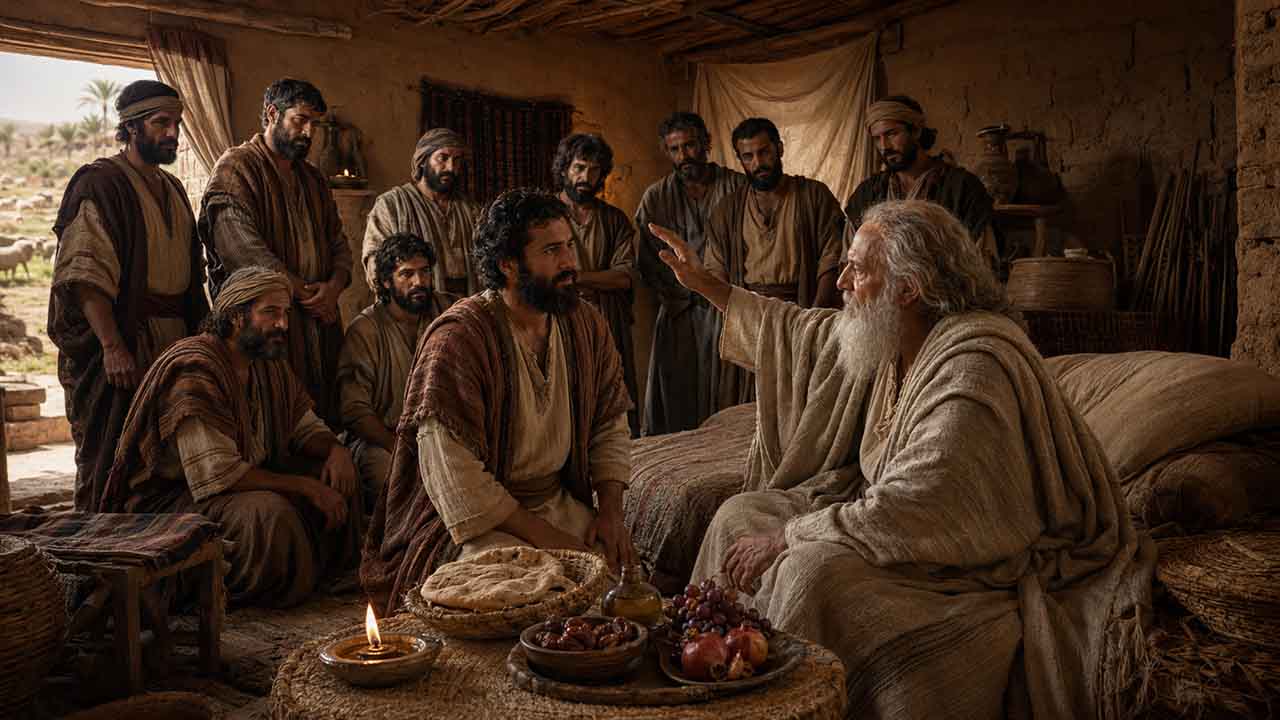
Asher’s Portion: Bread Fit for Kings
In the quiet weight of Jacob’s final blessings, Asher kneels before his father as bread, oil, and fruit echo the promise that his food would be rich and his descendants would yield royal delicacies. Around him, the sons of Israel listen in reverent silence as a dying patriarch’s words become a tribe’s destiny.
Listen to this Bible Exhibit
A Son in the Line of Promise
Asher is one of the quieter sons of Jacob. Scripture gives us only a few direct details about his life, yet those details are not empty. He was born during a painful struggle in Jacob’s household. He was named in a moment of joy. He was counted among the sons who became the fathers of Israel’s tribes. He entered Egypt with Jacob’s family and received a blessing that pointed to abundant provision.
Asher’s story teaches us to read the Bible with care. Genesis is not only about Abraham, Isaac, Jacob, Joseph, and Judah. It is also about the whole family that God was forming into the nation of Israel. Some people in Scripture speak often and stand near the front of the story. Others are named only a few times. Yet the Lord does not forget the quieter names. Asher reminds us that God carries his promise through ordinary people, ordinary families, and even homes marked by pain.
Born in a Divided Home
Asher was Jacob’s eighth son and the second son born to Zilpah, Leah’s servant. His birth must be understood within the sorrow of Jacob’s household. Jacob loved Rachel more than Leah, and Leah lived with the ache of being unloved, even while the Lord saw her affliction and gave her children [Genesis 29:30-35]. Rachel’s barrenness then deepened the rivalry between the sisters, and both women began using their servants in the struggle for children and honor [Genesis 30:1-13].
Into this troubled home, Asher was born. When Zilpah gave birth to him, Leah responded with joy and said, “How happy I am! The women will call me happy.” So she named him Asher, a name tied to happiness and blessing. That name is important. It shows that even in a house filled with comparison, jealousy, and sorrow, God was still giving life. Joy broke into a wounded family.
The Bible does not pretend that Jacob’s family was peaceful or pure. The sons of Israel were born in a home full of weakness. Yet this was the family through whom God would keep his promise to Abraham. The Lord had promised to make Abraham into a great nation and to bless all peoples through him [Genesis 12:1-3]. Asher’s birth shows that God’s covenant purpose was moving forward, not because the family was flawless, but because God is faithful.
A Son Who Is Counted
Scripture later lists Asher among the sons of Jacob who were born in Paddan Aram. He is named after Gad, his full brother, and stands with the sons who would become the fathers of Israel’s tribes [Genesis 35:22-26]. This kind of list may seem simple, but in Scripture, being named among Jacob’s sons matters. Asher belongs to the covenant family. He is not a side note to God’s promise.
The Bible records no speech from Asher. It gives no separate story of his courage, leadership, or failure. In that sense, Asher remains in the background. But background does not mean unimportant. God was not building Israel through only one son. He was forming a people from all the sons of Jacob, even those whose lives are recorded in only a few details.
Asher, therefore, teaches us a needed lesson. God’s work is larger than the most visible people in the story. The Lord counts those whom readers may pass over. He remembers names that receive little space on the page. In Asher, we see that quiet people still matter when they stand within God’s promise.
A Brother in a Broken Family
Asher also belonged to the brotherhood that surrounded Joseph. Jacob’s special love for Joseph stirred jealousy among his brothers, and that jealousy grew into hatred and betrayal. Scripture names Reuben and Judah at key moments in the account, but the brothers as a group bear guilt for what happened to Joseph [Genesis 37:18-36].
We should speak carefully here. Genesis does not single Asher out by name in the selling of Joseph. It does not give us his words or his private motives. Yet Asher lived inside that guilty household. He was part of a family scarred by envy, deceit, grief, and long silence. Later, when the brothers stood in Egypt and remembered Joseph’s distress, their troubled consciences showed that the sin had not been forgotten [Genesis 42:21-24].
This helps us understand Asher’s world. He was not raised in a clean, peaceful family. He lived among sinners who needed mercy. Yet the brothers’ sin did not nullify God’s promise. The Lord overruled their evil to preserve life through Joseph. Asher’s quiet life stands inside that larger testimony: God’s saving purpose is stronger than human guilt.
From One Household to a People
When famine brought Jacob’s family down to Egypt, Asher came with the covenant household. By then, he was not only a son but a father. Scripture names his sons Imnah, Ishvah, Ishvi, and Beriah; his daughter, Serah; and Beriah’s sons, Heber and Malkiel [Genesis 46:17]. These names may seem small, but they matter. The Lord was preserving the family of Abraham through actual households, children, and grandchildren.
Asher’s line also teaches us that the tribes of Israel did not begin as abstract symbols. They grew from real sons and daughters inside Jacob’s wounded family. The tribe that later bore Asher’s name began here, with one quiet son whose household entered Egypt under God’s providential care. Asher’s children belonged to the same promise that brought Jacob’s family through famine and into preservation. The son named for happiness became a father whose descendants would carry his name into Israel’s future.
Remembered in Jacob’s Blessing
Near the end of his life, Jacob blessed his sons and spoke words over their futures. Asher’s blessing is brief, but it is full of abundance: “Asher’s food will be rich; he will provide delicacies fit for a king” [Genesis 49:20]. Asher is not promised royal rule like Judah or given the long blessing of Joseph, but his name is tied to provision, richness, and satisfaction.
Later, Moses blessed the tribe that came from Asher with language of favor, oil, strength, and security [Deuteronomy 33:24-25]. That later blessing belongs especially to the tribe, but it also confirms the direction already seen in Jacob’s words. The son named “happy” became associated with the generous provision of God.
This matters for biblical theology. In Scripture, abundance is never merely luck. Food, oil, land, fruitfulness, and strength are gifts from the covenant Lord. Yet those gifts also test the heart. Asher’s blessing reminds us that the God of Abraham is not only the God who calls, commands, and judges. He is also the God who provides.
Why Asher Matters
Asher matters because Scripture teaches us to see the quiet names in God’s covenant story. He was born in conflict, named with joy, counted among Jacob’s sons, preserved through famine, and remembered in blessing. His life does not dominate Genesis, but it helps us see the breadth of God’s mercy.
Through Asher, we learn that God’s promise does not move only through the famous. It moves through the whole household of faith. It moves through ordinary generations, wounded families, and people whose names appear only briefly on the page. Asher’s line later carried both warning and hope: rich blessing could become spiritual compromise, yet God still preserved humble worshipers from that tribe.
Asher’s story calls the reader to trust the God who remembers. The Lord sees the unloved, gives joy in sorrow, preserves families through famine, and carries His promise forward until every blessing finds its fullness in Jesus Christ.
As for Asher, his food will be rich, and he will provide royal delicacies.
Genesis 49:20