


King Baasha
reigned 909-886 BC
Carousel of images for this Bible Exhibit
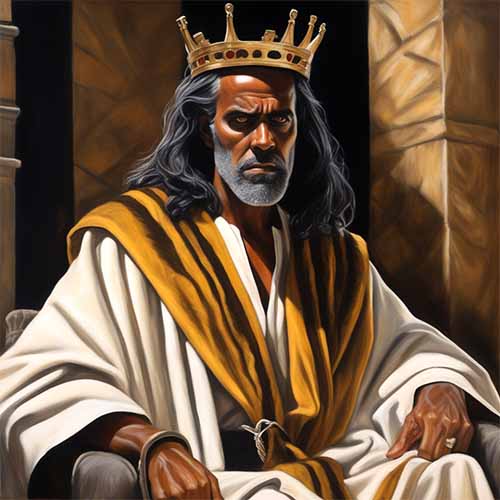
King Baasha, the Third King of the Northern Kingdom of Israel
Baasha rose to power through violence, overthrowing the house of Jeroboam and ruling Israel for twenty-four years from Tirzah. Though he was used to bring judgment on a corrupt dynasty, he repeated the same idolatrous sins and led the nation further from faithful worship. His reign was marked by constant conflict, political ambition, and reliance on human strength rather than obedience to God. Baasha’s story reveals the danger of mistaking power for approval and shows that long rule does not equal righteous leadership.
Baasha, the son of Ahijah from the tribe of Issachar, became the third king of Israel after assassinating King Nadab, the son of Jeroboam, while the army was besieging the Philistine city of Gibbethon 1 Kings 15:27-28 . Following his rise to power, Baasha sought to secure his rule by exterminating the entire house of Jeroboam, thus fulfilling the prophecy spoken against Jeroboam’s lineage by the prophet Ahijah 1 Kings 14:9-11; 15:29-30 . However, despite executing God’s judgment on Jeroboam’s household, Baasha continued in the sins of his predecessor, leading Israel into idolatry and rebellion against the Lord 1 Kings 15:34 .
Baasha ruled from his capital at Tirzah for twenty-four years, during which he was in continual conflict with King Asa of Judah 1 Kings 15:16 . To strengthen his position, Baasha fortified the city of Ramah, a strategic location north of Jerusalem, to control trade and movement between Israel and Judah 1 Kings 15:17 . This move threatened Judah’s stability, prompting Asa to seek an alliance with Ben-Hadad, king of Aram. Asa bribed Ben-Hadad with treasures from the temple and royal palace, convincing him to break his treaty with Baasha and attack Israel’s northern territories 1 Kings 15:18-20 . Ben-Hadad’s invasion forced Baasha to abandon Ramah, allowing Asa to dismantle its fortifications and strengthen his own defenses 1 Kings 15:21-22 .
Although Baasha enjoyed a long reign, his refusal to follow God’s ways led to his downfall. The prophet Jehu delivered a message from the Lord, declaring that Baasha’s house would suffer the same fate as Jeroboam’s—his descendants would be wiped out, and those who died in the city would be eaten by dogs, while those who died in the fields would be consumed by birds 1 Kings 16:1-4 . Baasha died and was buried in Tirzah, and his son Elah succeeded him 1 Kings 16:6 . However, just two years later, Elah was assassinated by his military commander Zimri, who proceeded to exterminate Baasha’s entire household, fulfilling Jehu’s prophecy 1 Kings 16:8-13 .
Baasha’s rise and fall serve as a powerful reminder of God’s justice. Though he was used to bring divine judgment upon Jeroboam’s house, he failed to learn from history and repeated the same sins. His ambition and military strategies could not protect him from the consequences of his disobedience. Like many kings of Israel, Baasha’s legacy was one of missed opportunities—he could have led Israel back to God, but instead, he chose the path of idolatry and ultimately faced the same judgment he had once carried out.