


King Zimri
reigned 885 BC
Carousel of images for this Bible Exhibit
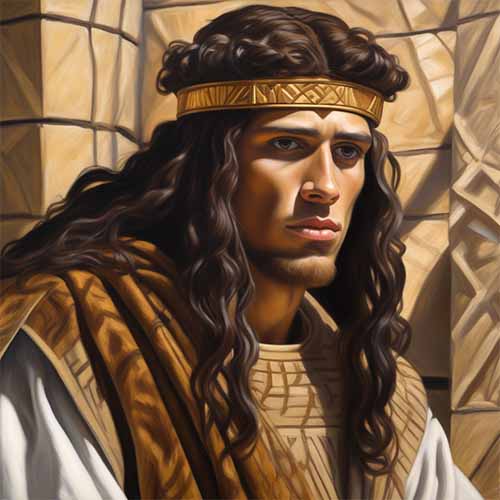
King Zimri, the Fifth King of the Northern Kingdom of Israel
Zimri seized the throne through assassination and ruled Israel for only seven days, the shortest reign of any king. Rejected by the army and surrounded by Omri’s forces, he chose death by fire rather than surrender, bringing his rule to a sudden and dramatic end. His brief reign exposes the chaos of leadership driven by ambition and violence and stands as a stark warning that power taken without God’s approval cannot endure.
Zimri was a chariot corps commander under King Elah of Israel. While the Israelite army, led by General Omri, besieged the Philistine city of Gibbethon, Elah remained in his palace at Tirzah, indulging in drunkenness. Seizing the opportunity, Zimri assassinated Elah and declared himself king 1 Kings 16:9-10 . He then proceeded to kill every male member of Elah’s family, fulfilling the prophecy given by the prophet Jehu that the house of Baasha would be utterly destroyed due to its idolatry and sin 1 Kings 16:1-4 .
Zimri’s reign was the shortest in Israel’s history, lasting only seven days. When word of Elah’s assassination reached the Israelite army, they rejected Zimri’s rule and declared Omri their king 1 Kings 16:16 . Omri and his forces abandoned the siege of Gibbethon and marched to Tirzah, where they quickly took the city. Realizing that he was doomed, Zimri locked himself inside the royal palace and set it on fire, choosing to perish in the flames rather than be captured 1 Kings 16:18 .
Despite his brief rule, Zimri was remembered as a traitor and murderer in all of Israel. His name became synonymous with treachery, as seen when Queen Jezebel mockingly called Jehu a “Zimri” when he approached to overthrow her household 2 Kings 9:31 . Like many of Israel’s kings, Zimri followed the sinful ways of Jeroboam, leading the people further into idolatry. God did not bless his actions, and his desperate attempt to seize the throne failed 1 Kings 16:19-20 .
Zimri’s story serves as a warning against seeking power through deceit and violence. Unlike King David, who waited patiently for God to fulfill His promises, Zimri took matters into his own hands, only to meet a tragic end. The Bible reminds us that “God removes kings and sets up kings” Daniel 2:21 , and those who seek power apart from His will ultimately face destruction. In contrast to Zimri’s selfish ambition, David refused to harm King Saul, choosing instead to trust in God’s timing 1 Samuel 26:9-11 . This contrast between David and Zimri highlights the importance of humility, obedience, and trust in God’s plan.
Zimri’s failed coup led to the rise of Omri, who established a powerful dynasty in Israel. However, even Omri’s reign was marked by idolatry, demonstrating that Israel continued to struggle with faithfulness to God. The downfall of Zimri and his house reminds us that sin has consequences and that proper security and success come from walking in obedience to the Lord. His brief reign stands as a testament to the instability of Israel’s monarchy and the dangers of pride and rebellion.