


Nehemiah and the Walls and Gates of Jerusalem
God Rebuilds His People in the Ruins of Exile
Carousel of images for this Bible Exhibit
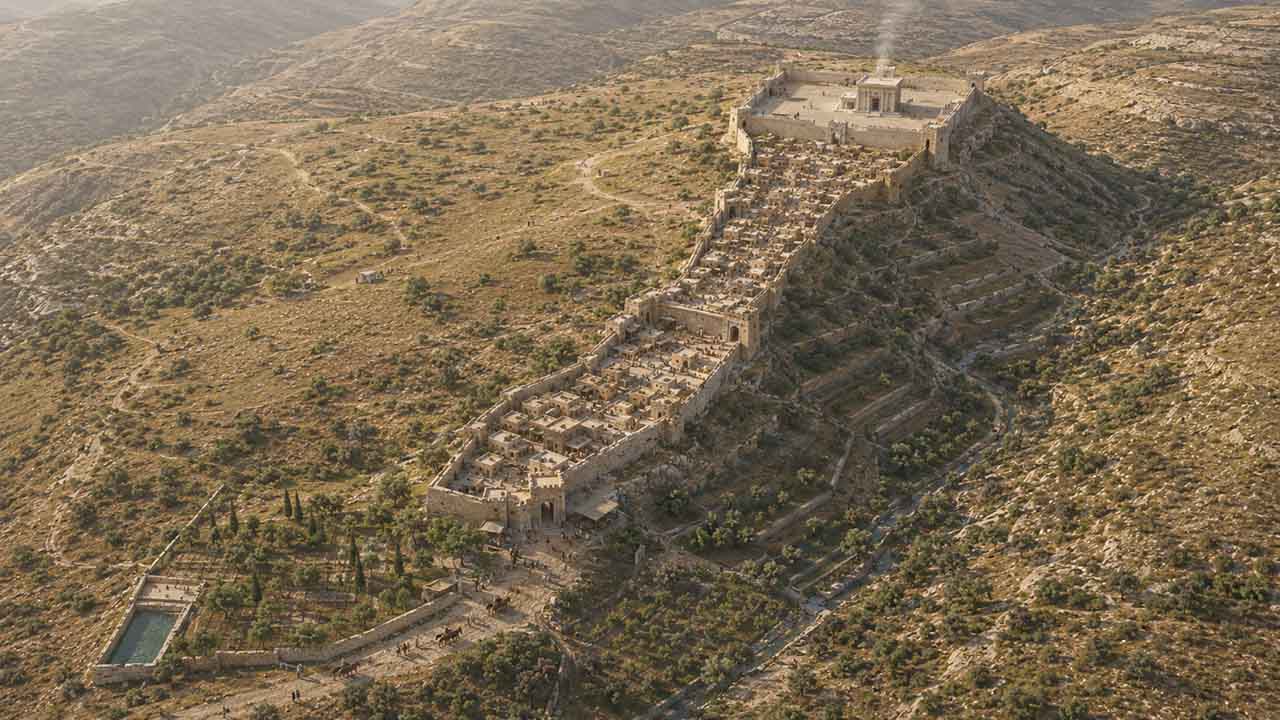
Jerusalem's Walls After Nehemiah
After the exile, Jerusalem rises again along the narrow ridge, small, scarred, and sacred, with rebuilt walls guarding the Temple, the Ophel, the City of David, and the restored life of God’s people. From the Siloam Pool to the northern Temple courts, the scene captures the hope of Nehemiah’s day: a humbled city made strong again by faith, labor, and the covenant mercy of the Lord.
A City Still Bearing the Shame of Exile
When Nehemiah rebuilt Jerusalem’s walls and gates, he was not repairing a monument from Israel’s past. He was serving the God who restores his covenant people after judgment. The temple had been rebuilt, but the city still lay exposed [Ezra 6:14-16]. Its wall was broken down, and its gates had been burned with fire [Nehemiah 1:1-4]. That report was more than bad news about stone and timber. It was a sign that Jerusalem still carried the shame of exile.
In the ancient world, a gate was where a city’s life became visible. People entered and left through it. Trade moved through it. Elders judged there. News was heard there. Public decisions were made there. A city without gates was vulnerable, disordered, and dishonored. For Jerusalem, burned gates said that the city of God’s name still needed mercy.
Prayer Before Plans
Nehemiah did not begin with a building plan. He began with prayer. He mourned, fasted, confessed sin, and appealed to the Lord who keeps covenant love [Nehemiah 1:5-11]. This is vital. Nehemiah did not treat Jerusalem’s ruin as a mere management problem. The city was broken because the people had broken the covenant with God. Restoration had to begin with repentance and mercy.
When the Lord opened the way through the Persian king, Nehemiah went to Jerusalem and inspected the walls at night. He passed the Valley Gate, the Dragon Spring, the Dung Gate, and the Fountain Gate, seeing the damage for himself [Nehemiah 2:13-18]. Faith does not pretend ruin is small. Faith looks at ruin honestly and then obeys the God who restores.
Shared Obedience at Specific Places
Nehemiah 3 can seem at first like a list of names, gates, and repairs. In truth, it is a holy record of ordinary obedience. Priests, rulers, Levites, goldsmiths, perfume makers, merchants, families, and the daughters of Shallum all take their place in the work [Nehemiah 3:1-32]. Again and again, the chapter says they worked “next to” one another.
That repeated pattern teaches a quiet theology of restoration. God did not rebuild Jerusalem through one heroic worker. He rebuilt it through people who joined together in faithful labor. Many repaired the wall near their own homes. That made the work personal. Each family was not merely fixing the city. They were guarding their own place in the covenant community.
The Gates and the Shape of Restoration
The gates of Nehemiah should not be treated as a secret code. They were real gates, with real uses, in a real city. Still, their names help us see the shape of restoration.
The Sheep Gate stood near the temple, where sacrificial animals entered. It reminds us that restored sinners need atonement. The Fish Gate points to daily work and public trade brought under God’s rule. The Old Gate calls the people back to the faithful paths of the Lord. The Valley Gate teaches humility. The Dung Gate shows that uncleanness must be carried away. The Fountain Gate and Water Gate point to life, cleansing, and the Word of God. The Horse Gate reminds us that conflict belongs under the Lord’s command. The East Gate faces hope. The Inspection Gate reminds us that all public life stands before God.
The Water Gate becomes especially important later, when Ezra reads the Law to the gathered people [Nehemiah 8:1-8]. Jerusalem did not only need stronger walls. It needed ears open to Scripture. God restores his people by ordering their lives under his Word.
Building Under Opposition
The work did not go forward without resistance. Enemies mocked the builders, threatened violence, and tried to fill them with fear. Nehemiah answered with prayer, watchfulness, and courage. The people worked with tools in one hand and weapons ready in the other [Nehemiah 4:6-23]. Restoration is not sentimental. When God’s people rebuild what sin has broken, opposition should not surprise them.
Yet Nehemiah also had to confront trouble inside the community. Some of the wealthy were oppressing the poor, charging interest, and taking fields, vineyards, and homes. Nehemiah rebuked them and called them back to the fear of God [Nehemiah 5:1-13]. This matters deeply. A wall built outside the city could not excuse injustice within it. True restoration includes worship, security, justice, mercy, and truth.
Finished with the Help of God
The wall was finished in fifty-two days. The speed of the work was so remarkable that even Judah’s enemies knew God had helped them. The rebuilt walls and gates became a public witness. Jerusalem’s restoration was not finally the triumph of Nehemiah’s leadership, though his leadership was faithful. It was the mercy of God made visible.
Later, when the wall was dedicated, the people celebrated with thanksgiving, songs, cymbals, harps, lyres, and great joy [Nehemiah 12:27-43]. The city that had been marked by shame now rang with praise. God had gathered his people, strengthened their hands, ordered their lives, and restored their worship.
How Nehemiah Points Us to Christ
Nehemiah’s gates opened the city again, but they could not save sinners. The Sheep Gate pointed toward sacrifice, but Jesus is the Lamb of God who takes away the sin of the world [John 1:29]. Jerusalem’s gates guarded access to the city, but Jesus is the true gate through whom God’s sheep enter and find life [John 10:7-11].
This is why Nehemiah’s walls and gates matter for understanding Scripture. They show that sin brings ruin, but God restores. They show that faith begins with prayer and moves into obedience. They show that public life, family life, worship, justice, work, and courage all belong under the Lord. Most of all, they point beyond rebuilt stone to Christ, the Savior who brings ruined people into the secure mercy of God.
So the wall was completed on the twenty-fifth day of the month Elul, in fifty-two days. When all our enemies heard about this and all the nations surrounding us saw it, they were afraid and lost their confidence, for they recognized that this work had been accomplished with the help of our God.
Nehemiah 6:15–16